Author: admin

  • How light influences your body

    How light influences your body


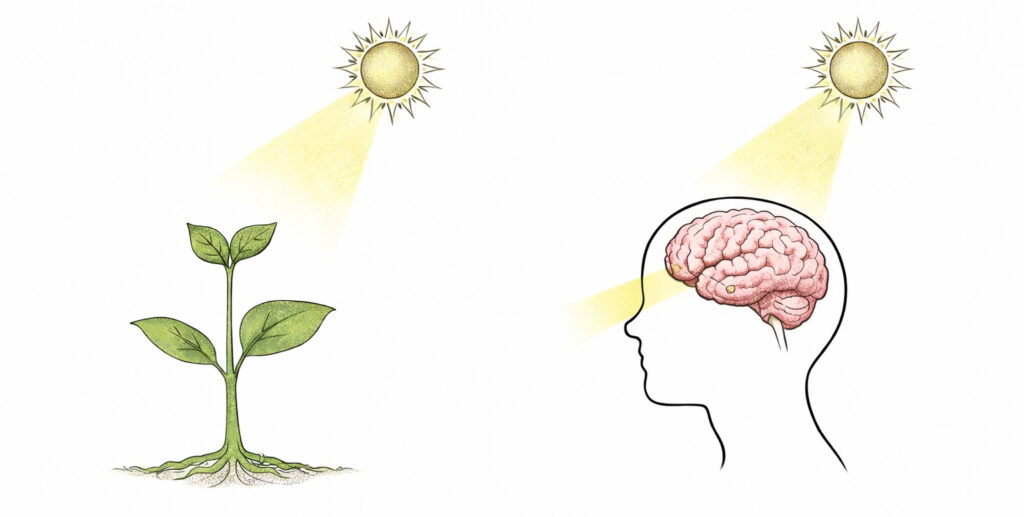
    Do you remember what they thought you in school abut plants needing oxygen, water and light to grow and bloom? Interesting fact: We humans need all this as well !
    Human brain and plants and light

    There is of course a difference between humans and plants but in the end we do both need light, to function well.

    Actually you are much more connected to this planet than you might like it and the more you live with it, the better you function, and the better you function the better your body works and the better your body works.. the better you feel.


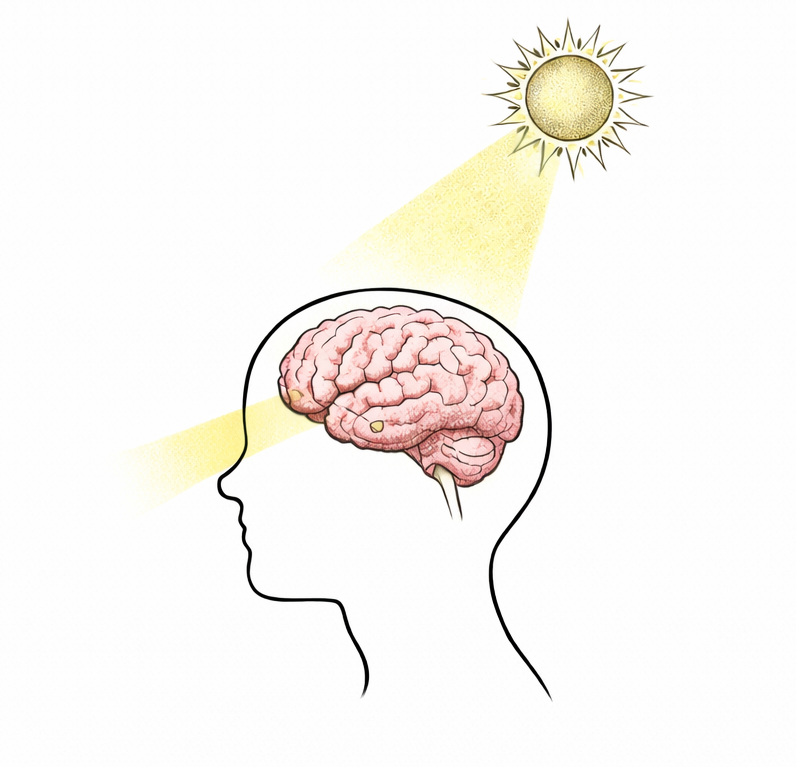
    Light → Eyes → Brain 

    Remember, there is this clock in your brain, and the cells in our eyes, which detect light? If not, you can read about it here: Why we have to sleep.

    You know what, it doesnt stop there. The rhythm continues, and the whole path actually looks like this:
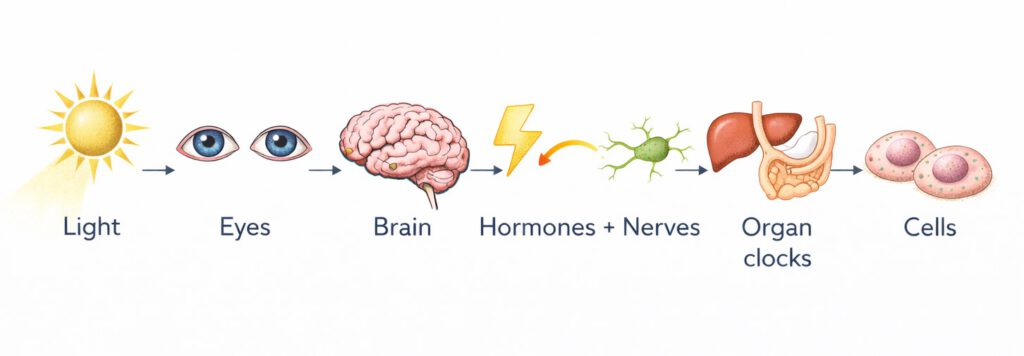
    Diagram Light human brain

    Because the Why we have to sleep post already explained about light, about your eye cells and your brains clock. It will now be about Hormones here:

    “So the light which comes through my eyes into my brain regulates my hormones?”
    ” Yes, in a way.”
    “Which hormones?”
    “Let see..”

    Hormones travel through our blood, hormones regulate our energy, our mood and how our body is changing over the years. Especially 2 important hormones are affected by how and when we view light. You probably have heard about them ..

    Melatonin (the sleep hormone) AND
    Cortisol (the wake + stress hormone).

    To understand this it is imoportant to know that, your eye cells are able to read the frequency of light in the atmosphere and that bright daylight is rich in short wavelengths:
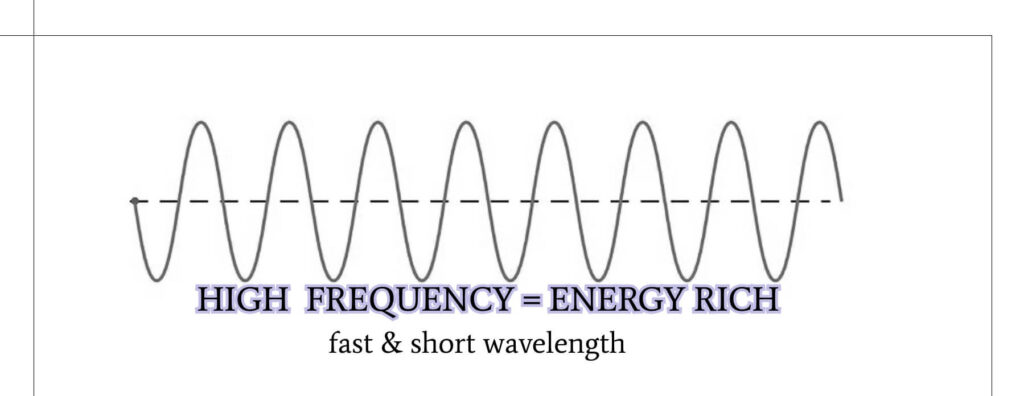
    high  frequency wavelength of light


    So when you see bright light your eye cells will react to it like this:  
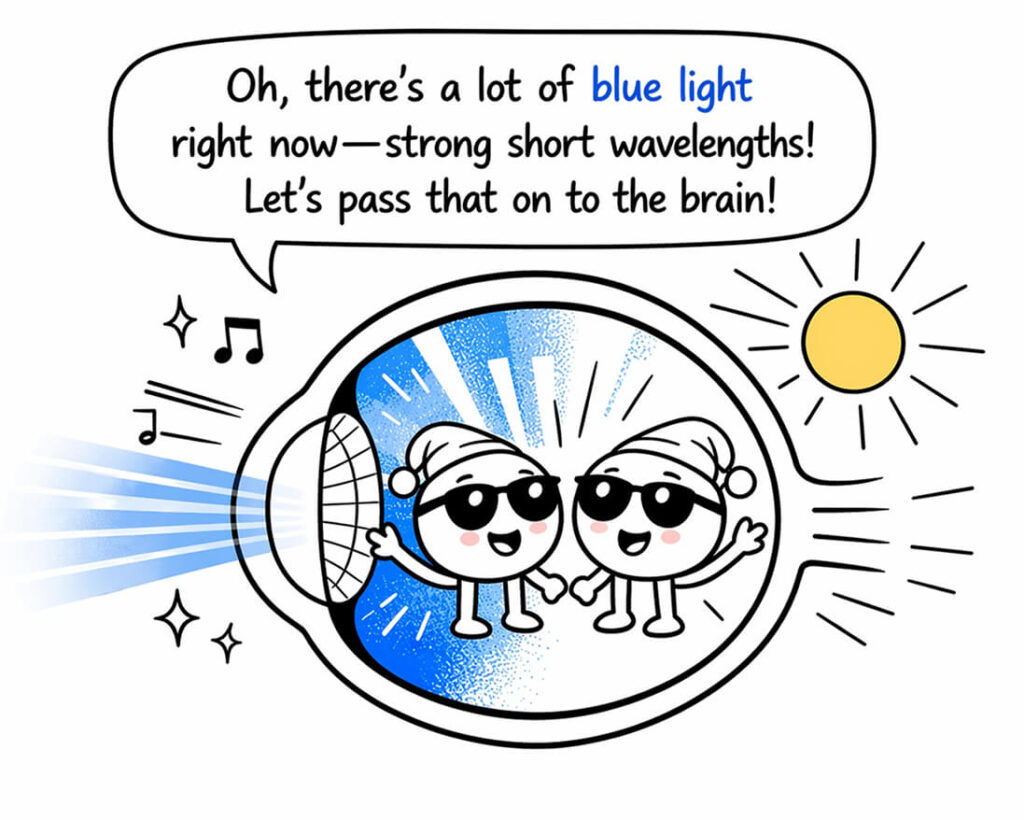
     blue wavelength light

    Your Brian spreads the information to your body: Lets go! Wake up. Day has arrived, start your task! And your body will start and…

    • … rise alertness
    • …rise body temperature
    • …increase cortisol 
    • …synchronise your internal clock for the day and 
    • …stop the melatonin production

    The brighter the light you see is, the stronger is your bodys response to it. To say this in a very simple way:

    “When you wake up in the middle of the night and you view bright light it will signal your brain it is daytime and your body will want to start doing its day tasks.”
    “Is that why, fewing bright light late in the evening and being on the phone at night.. is a problem ?”
    “Yes.”
    You might now argue: “But if I KNOW that it is night!”
    “Still, it wont change your bodys reaction to an outside influecne. Your body is a machine.. it is made to work in a specific way and you can not change this with your thoughts.”

    Look, maybe this helps: When the sun set and then very very strongly you think about the sun coming back up. Will it? No, there are patterns and rhythms which we can not change by simply thinking about it. There are certain mechanism and wys the world and we humans work and because we studied, we know about this things by today.


    Here are a few important things to keep in mind when it comes to the quality of light: 

    Not every blue light triggers the same, there is a massive difference between artificial and natural light.  The strongest indoor light ranges around 100–1,000 lux. Real daylight is about 10,000–100,000 lux. You see, no light is as effective as real sunlight and we are not able to recreate this light artificially. But we can step outside and let it naturally enter our body. 

    It is vitally important that you get good quality light communicated to your brain clock in the morning, because without enough quality light your melatonin production will not properly turned off and your for cortisol can not start properly.

    “We know based on a lot of evidence that if you don’t get your cortisol and melatonin rhythms timed right there are tremendously bad effects on cardiovascular health, dementia, metabolism, diabetes risk, fertility learning and depression. “

    It is important to get quality light from outside, only viewing indoor light through a window will not have the same quality.

    That’s often why people feel more tired and less active in winter. It is not because they are “lazy,” but because their eye cells do not get enough natural light their “morning time marker” is missing and therefore their body has a hard time to know what time it is and when to feel tired and when to feel awake.

    If you wake up and directly look at your computer or your phone or another artificial light, your eye cells will be activated but not in a good way.

    “Many positive things happen when we time our clock right. So, what we want to do is to get outside as soon as possible after waking up. To make sure our body can do his work in the best settings.”

    “Alright, got it!, I know how to properly wake my body up and start my system. But what about the turn off? What about sleep? Can I also use light for sleeping?”

    Yes. You can!

    Therefore let’s quick look back to ~ 1 Million Years ago (1.000.000 years) to understand something important. It was the time when we humans used fire as the only light source next to daylight.
    For a long time, fire and daylight were the only light sources we humans had.  Electric light bulbs only established around ~140 years ago and I am now doubting that, we ever got well educated about those.

    ! INFO:  Fire has about 10 – 100 lx. Remember sunlight? It has 10.000 – 100.000lx.  Lux is how bright your eyes perceive the light, not its color, not the temperature, not the wavelength.

    Daylight contains a continuous spectrum of light, so we find a full range of light in it:

    Ultraviolet light: < 400nm → Vit D production, Sunburn (invisible)
    Blue light: ~400–500 nm → affects alertness
    Green light: ~500–570 nm → where eyes are most sensitive
    Red light: ~620–700 nm → warm light
    Infrared: > 700 nm → heat (invisible)

    SunlighT → full range 400–700 nm

    Firelight  → mostly 600–700 nm + lots of infrared (>700 nm)

    Fire is dominated by long red and infrared wavelengths.

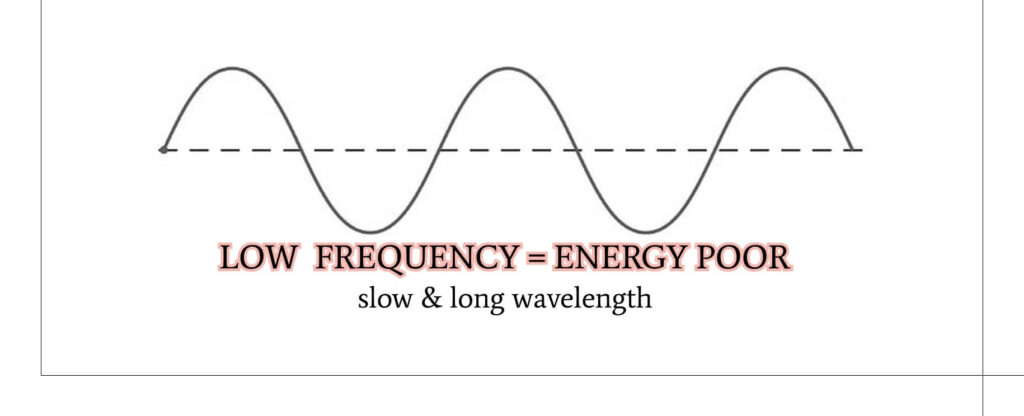
    Low frequency wavelength of light

    This low frequency, long wavelength light signals the body:
    begin to wind down,

    • lower alertness,
    • reduce cortisol, 
    • synchronise the internal clock for sleep
    • increase melatonin production
    • melatonin release

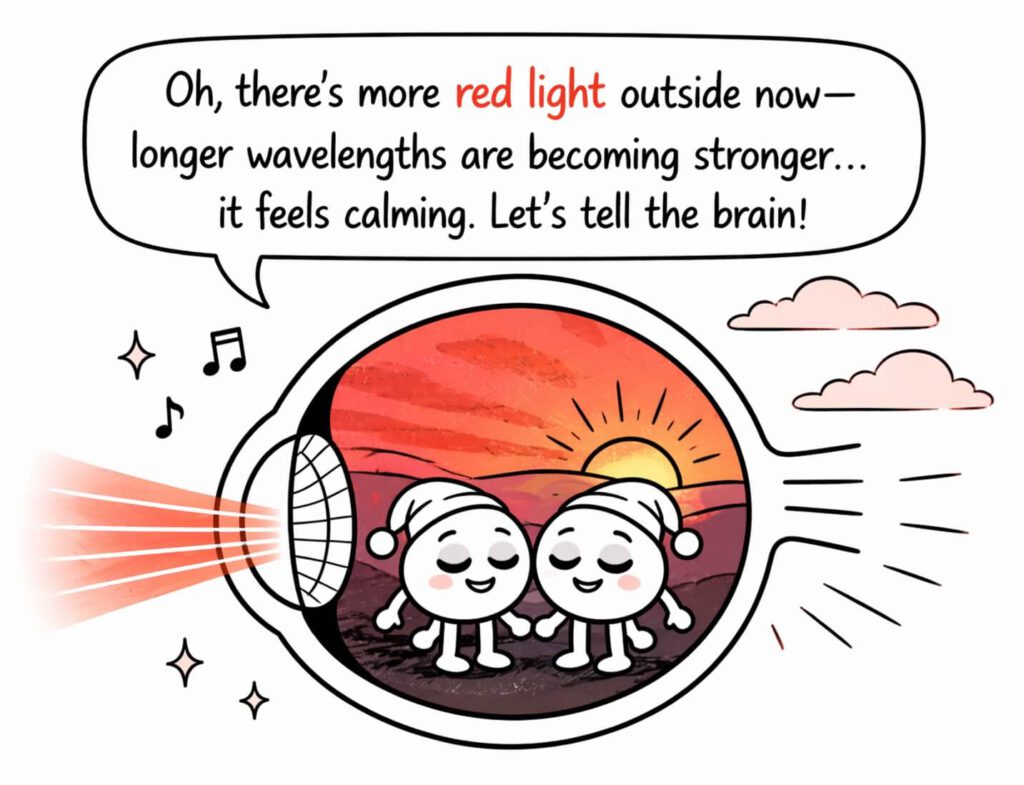
    A beautiful sunset, when the sky turns all red, it is similar to this wavelengths of fire and the cells in your eyes detect it:

    Morning →  blue light increases → “Wake up, energy – new day!”
    Evening → blue light disappears → “Wind down, calm – sleep!”

    The red light from the sunset and sunrise is a transition-signal for your body that a change is happening. Either from sleep to wake, or from wake to sleep.

    “The daily rhythm of the sun has always been there and it has always been the same. So our hormone system is exactly constructed towards it. Our whole cycle is linked to the solar cycle.”

    Any change, disruptions or misalignments can impair this balance, leading to dis-regulation of hormonal rhythms.

    Interesting Side facts:

    1. If we would be in complete darkness the cycle would still work. Because after the rise of cortisol (about 12 to14 hours later) melatonin will naturally come up.
    2. Most of the night owl people are just not getting enough light during the day! It dictates what time you get tired and sets the foundation of proper sleep! “Maybe your brain just didn’t get enough sunlight.”
    3. Blind people (provided they still have eyes) maintain the neurones which set the clock. Its not about seeing the sun, you don’t have to look in the sun directly! This neurones in your eyes which activate this mechanism get activated by the particular wavelength of light that are present in the atmosphere.  They get activated even if they come through cloud cover you don’t necessarily need to see the sun directly to get them startet.

    Many people only know cortisol as the stress hormone but lets understand what cortisol really does?

    Cortisol helps you to feel awake, to wake up, to regulate your bodies temperature, your fluid balance, and it keeps your blood sugar within healthy ranges.

    Shortly before you wake up, your cortisol levels rise naturally by up to 50–60% and makes you feel awake, energetic, and alert. It slightly increases blood pressure and body temperature.

    Light (especially bright blue light) amplifies this. Therefore watching the sunrise (or when you miss it) good quality sunlight after waking up, helps your body to wake up and get your cortisol rhythm started.

    People who tend to wake up after 3-4 hours of sleep feeling wide awake are generally struggling with their cortisol rhythm. 

    Cortisol in the morning = good (makes you feel awake)
    Cortisol in the evening = bad (disrupts sleep).

    • Light disruption produces changes in metabolism. (1)

      (1) Metabolism: the three main functions of metabolism are the conversion of energy from food, the conversion of food to building blocks and the excretion of wastes. That is why sleep loss can lead to endocrine diseases like: Weight gain, depression, fatigue, immune weakness, fertility problems and diabetes risk. 
    • The behaviour of viewing blue light in the night (11 to 4pm) invokes the Habenula. (2)

      (2) Habenula: A brain region, known as an “emotion control center, which acts as a major bridge between the limbic system and the midbrain. The behaviour of viewing light at night can significantly activate disappointment circuits, reduce dopamine and increase depressive thoughts patterns in the day thats follows
    • Insufficient exposure to natural light has been linked to SAD. ***(3)

      (3) SAD: Seasonal affective disorder, is a type of depression that occurs at specific times of the year often during the darker months. Reduced daylight in winter (or staying indoors) affects circadian rhythms and vitamin D intake.

    Now look, because I am not only a fan of research but also of coming to conclusions to make your life better. Here are my solutions:

    Get natural light exposure after waking up, to start your day and to set your system correctly. Watch the sunset to tell your body its evening and dimm your lights at night to support your systems rhythm and get good sleep.

    “It could be worse”, right?

    I love you, please do the same,

    Wanda
    J.


    BONUS facts:

    1. Glucose tolerance peaks during daylight and is lower during the darkness cycle
    2. Melatonin drops at sunrise and rises around sunset
    3. Cortisol rises just a little later than sunrise
    4. Sleep deepens at 1:00am
    5. Body temperature rises at 3:00am 
    6. Through a single sunrise you can set your clock forward or backward by several hours! (Can be healpful to knwo when traveling between time zones..) 

    Research References:

    Dantas, F.M., Oliveira, M.L.P., Luzardo, R., Araujo, J.F. and Silva, A.C. (2025) ‘The role of sunlight in sleep regulation: analysis of morning, evening and late exposure’, BMC Public Health, 25, Article 3362. doi:10.1186/s12889-025-24618-8.

    Dijk, D.-J. and von Schantz, M. (2005) ‘Timing and consolidation of human sleep, wakefulness, and performance by a symphony of oscillators’, Journal of Biological Rhythms, 20(4), pp. 279–290. doi:10.1177/0748730405278292.

    Dunster, G.P., Hua, I., Grahe, A., Fleischer, J.G., Panda, S., Wright, K.P. Jr., Vetter, C., Doherty, J.H. and de la Iglesia, H.O. (2022) ‘Daytime light exposure is a strong predictor of seasonal variation in sleep and circadian timing of university students’, Journal of Pineal Research, 74(1), p. e12843. doi:10.1111/jpi.12843.

    Franzago, M., Alessandrelli, E., Notarangelo, S., Stuppia, L. and Vitacolonna, E. (2023) ‘Chrono-nutrition: circadian rhythm and personalized nutrition’, International Journal of Molecular Sciences, 24(3), Article 2571. doi:10.3390/ijms24032571.

    LeGates, T.A., Fernandez, D.C. and Hattar, S. (2014) ‘Light as a central modulator of circadian rhythms, sleep and affect’, Current Biology, 24(10), pp. R461–R473. doi:10.1016/j.cub.2013.06.039.

    Rao, F. and Xue, T. (2024) ‘Circadian-independent light regulation of mammalian metabolism’, Nature Metabolism, 6, pp. 1000–1007. doi:10.1038/s42255-024-01051-6.

    Huberman Lab (no date) Dr. Glen Jeffery: Using red light to improve metabolism. Available at: https://podcastnotes.org (Accessed: 7 April 2026).

    Max Planck Institute (no date) Translational sensory and circadian neuroscience. Available at: https://www.kyb.tuebingen.mpg.de (Accessed: 7 April 2026).

    MDPI (no date) Hormonal regulation and circadian processes. Available at: https://www.mdpi.com (Accessed: 7 April 2026).

    NCBI (2023) Circadian rhythm and the 24-hour clock. Available at: https://pmc.ncbi.nlm.nih.gov (Accessed: 7 April 2026).

    Osmio Water (no date) Sunlight and health. Available at: https://www.osmiowater.co.uk (Accessed: 7 April 2026).
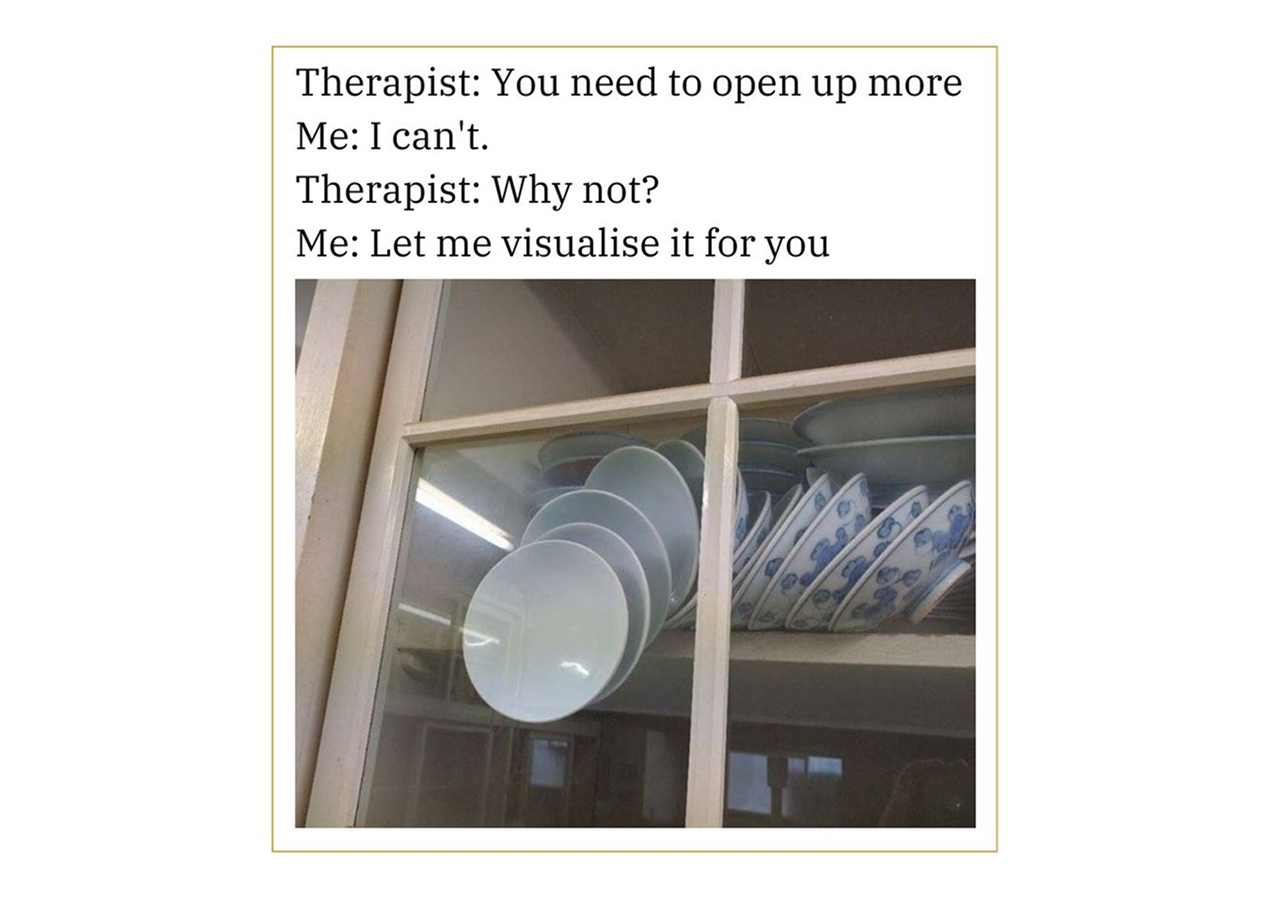
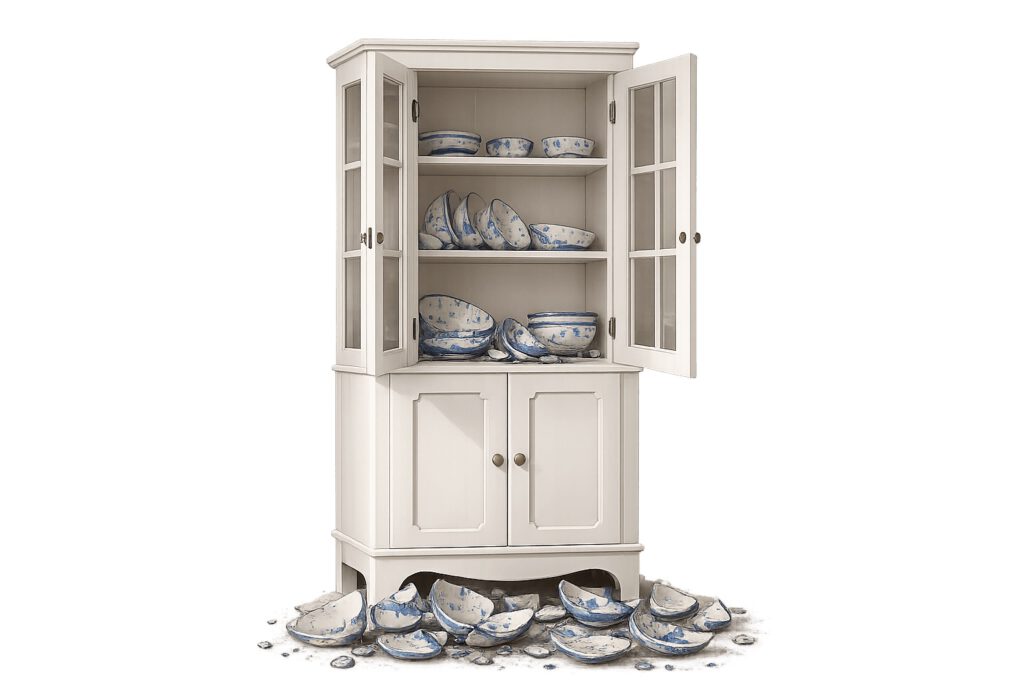
  • Broken Bowls

    Broken Bowls


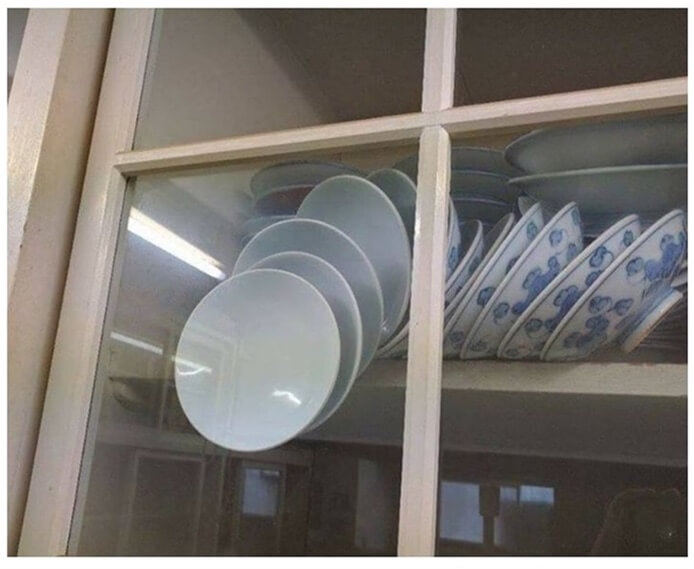
    Do you feel like this?
    Look, there are only 2 things to do in his situation: 
    It is, quite simple, once you break it down..

    1. You leave the doors as they are.
    2. You open the doors.

    Now, keep in mind, if you don’t open the doors yourself, your doors can always be opened by another person or by a shocking event (for e.g. an earthquake, a fire or an elephant walking over your cupboard). 

    Believe me, leaving the doors closed and looking at the bowls being stuck like this (because you are scared what happens when you open it..) is definitely not the best (long term) option.

    If you choose to leave it, in the moment which the picture shows us, you can not do much. 

    Do you understand?
    You can’t fix what isn’t broken and you can’t use your bowls either. Only when you open the doors of your cupboard you can start to deal with the consequences. 

    Which one are you scared of? All the broken pieces or the noise when they break?

    None?
    And why do you leave it closed? Lazy? Mhh.. that is a shitty excuse, sorry. Go open it. Clean up and make something out of your life. Do not leave it closed just because you are lazy.

    Or, are you scared of both? 
    That is fine, look:
    Once you are brave and you open the doors, maybe not all of them will fall down. And if they really all fall, maybe not all of them will break! Or maybe some of the broken bowls are super easy to repair. Maybe the fact that they break helps you to finally part with them?* (*Of course a bowl doesn’t have to break in order to part with it, but when it breaks we often see more clearly how much we want to keep it or whether it is also ok for us to live without the bowl.) 

    Maybe you have bowls that brake, which you don’t want to repair but also not say goodbye.

    That is fine as well. 

    You can keep the broken pieces of your bowls as long as you want. Don’t worry, you can for example use them as decoration in your front yard or you could make a mosaic table?

    If you want, you can keep them for the rest of your life. Who cares? Broken pieces of bowls. They don’t have much value for anybody but you. If someone is interested, they can ask you about the pieces. Then you can tell them what is behind it, or not. How you want. It is a 100% your decision.

    Of course you can also get rid of all the bowls that break. You can give them away, or throw them into a lake or dispose them somewhere else. Again, you choose that.


    something to clarify:

    You don’t have to tell anyone that you open your cupboard or how many bowls broke when you did. Only please, when you don’t know what to do with the broken porcelain pieces or how to glue broken bowls back together, get support. Be aware that broken porcelain can be sharp and you can cut yourself.

    Depending on how long your doors were closed, the plank in the cupboard may be rotten as well, which means that the cupboard also needs reparation. 

    So imagine this scenario:

    When you don’t know how to repair a cupboard nor how to glue bowls back together or where to depose them. You will be standing there and look stupid with your broken bowls.

    Broken bowls Post

    Luckily, there are people out there who know about shards and cupboards! People who can give you advice and help you to fix stuff up again (you can of course ask different people for advise). But reach out. Ask for help.

    Yes, I can see you asking now:
    “What if I want to do it all by myself and what if I don’t want to fix any bowls? What if I just put everything in my car and drive it to the dump!?”

    Yes, possible. You can throw everything away. On the way back from the dump you can get new bowls and a new cupboard, then you put it in the same place and it is fixed.


    Still there are some things to keep in mind If you choose this option: 

    1. You still have to throw away all the broken stuff and doing this by yourself can sometimes be harder than you expect. This also depends on how many bowls brake and the condition of your cupboard. 
    2. Sometimes getting rid of things is more work than fixing them up again.
    3. You can still cut yourself, so it is important to know about basic first aid stuff.
    4. It might cost more money to buy everything new compared to repairing it.
    5. If you choose to throw everything because you don’t know how to repair things and you don’t want to ask for help. Learn it! There is enough knowledge out there to self-educate about how to repare bowls, cupboards and even the basic first aid knowledge you can learn on your own.
    6. Lets say it happens again, that your cupboard looks like this. You need to buy everything new again, in this way you create a lot of trash plus you don’t know how to repair bowls and help others if you get asked for help.  


    Lets do a different scenario now

    Broken Bowls Post

    Imagine you leave your cupboard how it is in the picture but you still go and buy a new cupboard and new bowls instead. You can already see the issue about this scenario, right? 

    1. You will end up having many cupboards, many bowls and therefore you need quite some space.
    2. Moving will become more difficult.
    3. Having people for a visit will at one point probably become a little uncomfortable for you between all your cupboards. Because, how to explain this? “Yea.. you know, I am scared of the bowls falling thats why I leave it like this”. (Maybe then people who see this, want to help you to open the doors and offer you help with cleaning up.)


    … which brings us to the last scenario: 

    Asking for help.
    Maybe it makes you feel uncomfortable that you can not do it yourself?

    Look: There are people out there who love fixing things! And I am sure, if they know about bowls and cupboards they are extremely happy to help you! You can also ask a friends or a person you feel safe for help without knowing how much they know about fixing. You can still figure it out together! You are not alone and it can be great laughing and crying over all the broken pieces! No need, to be embarrassed. Trust me, I think everyone has this situation at least once in a life time.

    Do you see a little clearer by now? Once you find yourself in this situation (from the picture) in the end, it is the best to take care of it as soon as you safely can.

    last but not least, this enables you to..

    …be more considerate of your bowls and your cupboard. You know now that some of your bowls already broke once and you know that a cupboard can also rot over time.

    When you visit other people’s homes, you suddenly understand things better and you take the bowls out of other peoples cupboards more carefully. You know, it could be that these bowls already broke once.

    Maybe, over a cup of tea, the person tells you about it:

    You know,… this bowl that you are holding there in your hand, once it was broken,… but I repaired it… Do you want to know how I did that?”

    This is (for example) how you learn. Not every bowl is repaired in the same way. The more bowls you see break, the wiser you become. In the end, you can repair them all.


    HEADS UP:

    Even if you know how to repair broken bowls and cupboards, it can still be hard to stand in front of a pile of broken pieces and have a broken cupboard on top of that. That’s why it is always good to have someone, who stands next to you and helps you to pick up the pieces and maybe also helps to put them back together or to sort them out.

    There are techniques for opening cupboards completely on your own, but you need to be very careful and be aware that this bowls will comes toward you most likely pretty strong and pretty fast. In all honesty it is possible to open it yourself, but it is important to know who you can turn to in an emergency, if you suddenly need a helping hand.

    In case of desperation: Never be afraid to ask (about all of this.. and more!) We can only grow if we learn and only learn if we ask. Or do you know someone who explains you exactly the things you want to know without asking about it? You can see how small this chance is no?

    So: Prepare yourself.
    Ask and then open your cupboard.

    Think about how nice it will look when everything is sorted and tidy (again). Some of the bowls will still serve to feed you and some will be repurposed and you will only look at them from a distance, depending on what you decide to do with them.

    It can be that you have bowls which will never be whole again, even though you want them to. That, my love, is called “life”.
    We don’t have everything under control and yet, more than we think. Breaking something is one thing. Repairing it, is the other. I hope you can understand that standing still is … only a short term solution not a way of living and in the end you are the one who has to take action. 

    The bowls are only metaphors, I assume you are smart enough to understand this. Still always feel free to ask, if something is unclear to you. 

    With the best of luck,
    Wanda

  • “You are You”


    “I am me
    and never someone else.
    This is my time,
    this is my life.

    What is important to me,
    I decide myself,
    because no hour will ever be given back to me.
    Whether others point fingers at me,
    whether they are jealous,
    I will speak or remain silent,
    as I see it right.

    I am me,
    and never someone else.
    This is my time,
    this is my time,
    this is my time.
    This is my life.”

    ‘I am Me’, Songtext von Rolf Zuckowski 

    I highly recommend listening to this musical “Der kleine Tag” von Rolf Zuckowski, once in your life. There is only a german version but it is on my ‘to Do – list’ to make an english translation. It has been with through my whole childhood. I know it by heart and I truly love it. Who knows, maybe you will like it as well?

  • What if we don’t sleep? 

    What if we don’t sleep? 


    And how much control do we actually have?


    The following is about a ~ 6 minute read

    YOU CAN DO IT! 

    Let’s look at the sun again

    yes, I love her a lot!

    The sun is much older, bigger and more powerful than you are and it has its very own rhythm (which, by the way, rotates slower than the earth but its surface moves faster). 

    Well, for us it seems that the sun comes up every morning and goes down every evening, right?
    Actually the sun coming and going is because we are spinning too!
    Sounds weird?
    You think you don’t have a natural rhythm which you follow?
    And what, if I tell you that, through studying living creatures on this planet, we found out that: 

    “Most animals, plants, even fungi have a natural rhythm, it is a cycle each one follows. There are only very few microbes and deep-sea organisms which don’t follow a typical rhythm.”

    Up to today we humans, as a species discovered many things through observing ourselves, other living organisms and the world around us. We understood that almost all living creatures follow internal biological rhythms, and that the way ‘we humans spin’ is shaped by interactions between our brain, biology, and the environment we are located in.

    MAKE SURE TO understand:

    The rhythm we (all) follow is as old as we, as a species, are and is primary coordinated by: Star-light! Not just any starlight, it is governed by (in my opinion the coolest star out there): our Sun! **

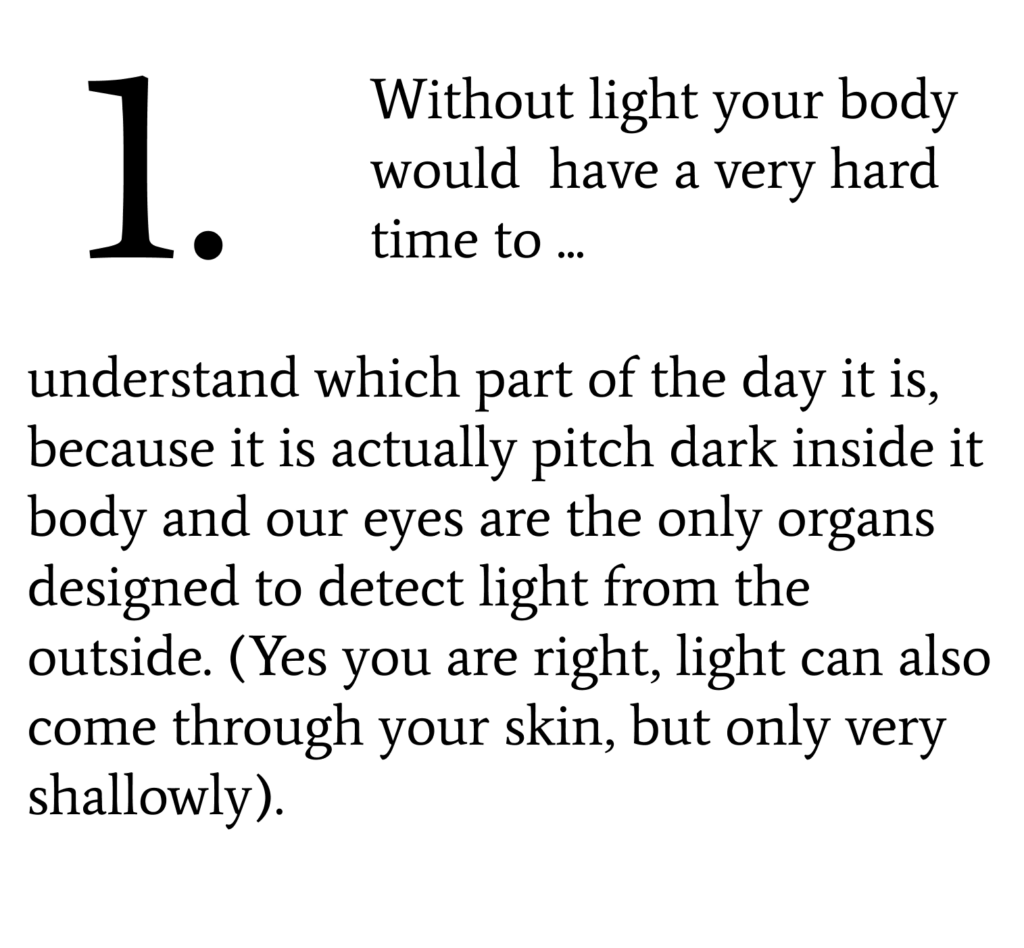
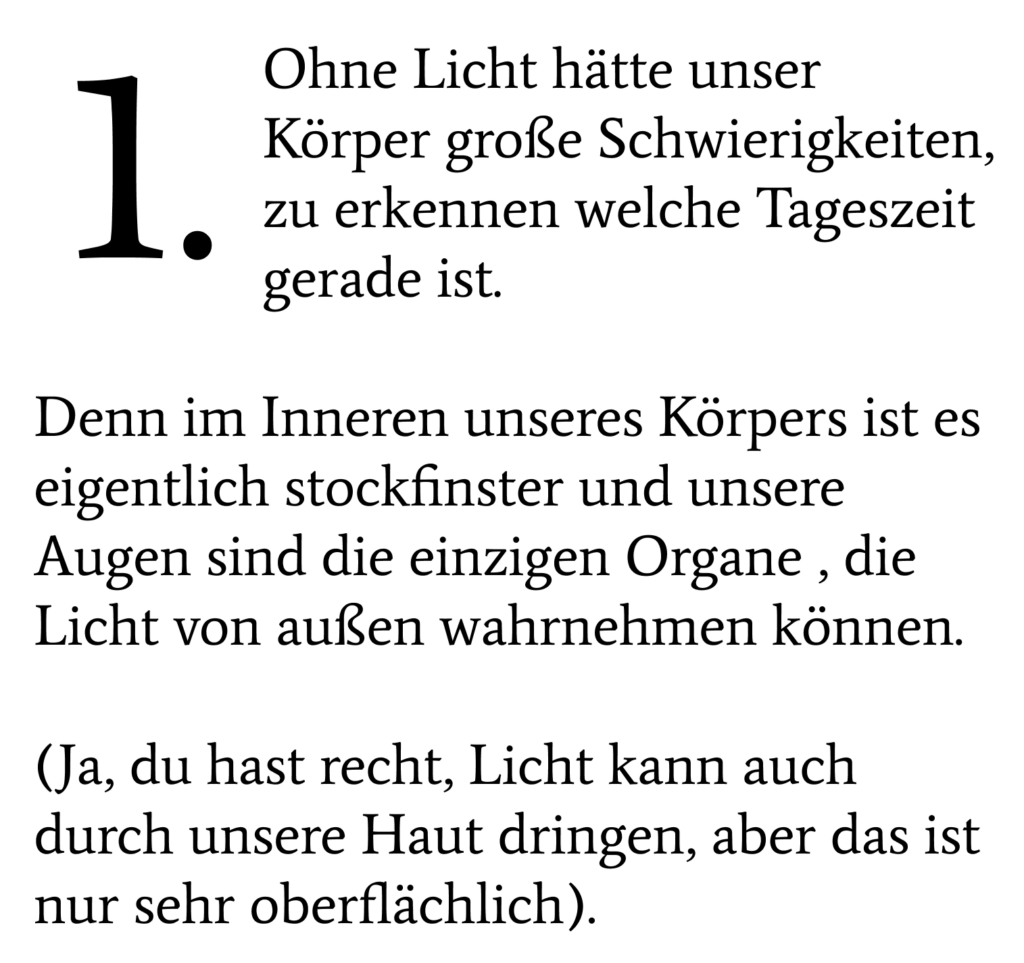
    Deutscher-Text im Bild darunter
    Deutscher-Text im Bild darunter

    Let’s start to understand light and how we can use it to our advantages!

    Therefor, LET’s understand this INNER rhythm: 

    The rhythm inside you is controlled by a clock, and the clock is located in your Brian. Scientist also say: The suprachiasmatic nucleus (SCN), located in your hypothalamus.

    But we say:  ‘Circadian rhythm’ and ‘circadian clock’.
    Named after the Latin ‘circa’ = ‘around’, and ‘dies’ = ‘day’, so it is your 24 hour rhythm. 

    The presence or absence of light…

    …is the main signal for this circadian clock. 2. Because of this clock your Brian knows what ‘time’ it is. 3. This process happens through your eyes. (More about this in a later Post, soon!)
    For now, in short:
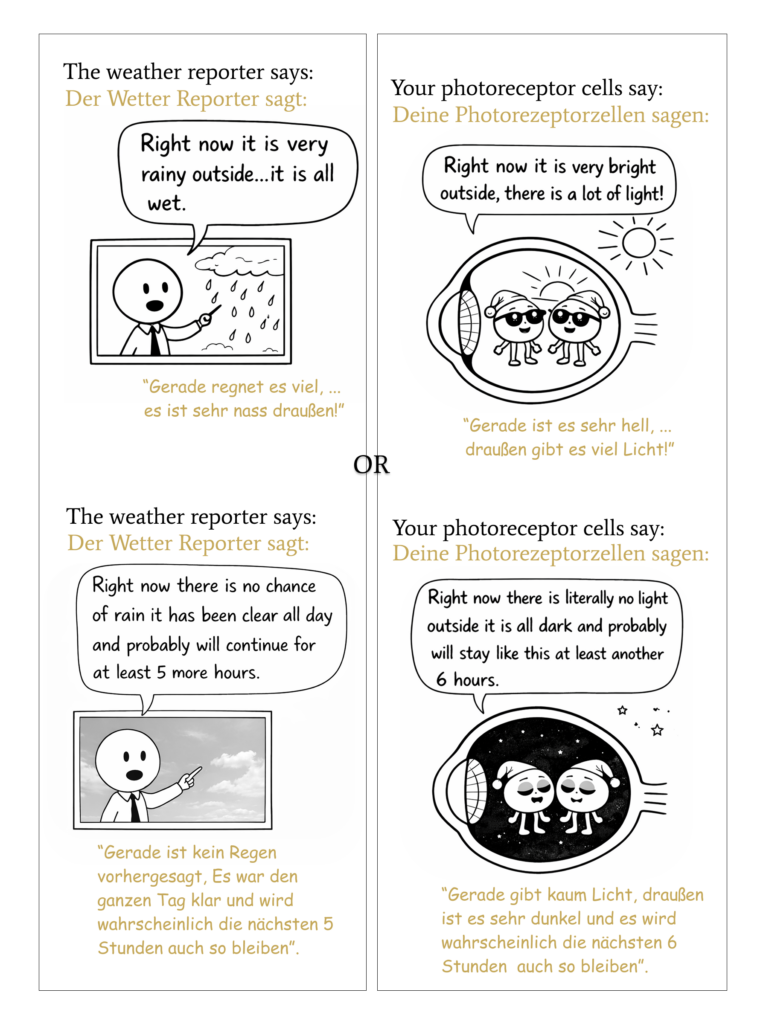
    There are photoreceptors in your eyes which are NOT used for vision, but: They are body clock sensors which read the light in the atmosphere and tell it to your brain.

    Maybe imagine it like a weather report: 

    Let’s say you now try to trick your system / you don’t follow the way your body was designed. It would be like leaving the house without a Jacket even tho the weather reporter tells you its really rainy. Or, not wearing a hat in the hottest sunshine!

    Just pick any of the following: 

    • You don’t sleep at night.
    • You expose yourself to light when it is night. 
    • You miss out to get light during sun hours.

    If your inner rhythm does not ‘spinn’ well, parts of your system (Mh, how to say it properly?) …can really get fucked!

    So the key take away here, is only to know, that:
    Through your behaviours you are in the position to either mess with your inner system or to help, protect and support it.

    My advise? “Just start your day in the morning and finish it in the evening”


    Here is a little sneak peek of:

    ‘Systems which are coordinated and synchronised by your circadian clock.’

    – Affective Neuroscience
    – Mesocorticolimbic Dopaminergic System
    – Endocrine System
    – Cardiovascular Physiology
    – Metabolism
    – Immune System
    – Cellular Homeostasis
    – Musculoskeletal Physiology
    – Gastrointestinal Physiology
    – Sensory Neurophysiology
    – Thermoregulatory Physiology
    – Renal Homeostasis
    – Reproductive Endocrinology
    – Peripheral Circadian Oscillators

    Don’t worry I will do my best to explain all those in the most simplest and shortest way…
    xo, W.


    A Quick Bonus knowledge:

    RHYTMNS

    The Circadian rhythm is not the only rhythm we defined but we have decided to categorize 4 different rhythms.

    Ultradian rhythm: Biological cycles shorter than 24 hours, repeat multiple times a day. Regulates: Sleep (REM and non-REM), breathing, heart rate, hunger, and alertness.

    Circadian rhythm Operates on a ~ 24-hour cycle, events that happen once every 24 hours. Regulates:  Hormone releases (like cortisol and melatonin), sleep–wake cycle, metabolism and temperatures.

    Infradian rhythm: Biological cycles that last longer than 24 hours but still many times within a year.  Regulates: Menstrual cycles and seasonal changes and affects in physiology and behaviour.

    Annual Rhythm: Biological cycle that repeat once per year. Regulates: Seasonal migration or breeding patterns in animals, plants blooming, or mood changes in humans. 


    Even tho they all go by themselves they somehow interfere and work together. Remember, everything has its own rhythm and still works together.


    Research References: 

    (01) Bloch, G., Barnes, B. M., Gerkema, M. P., & Helm, B. (2013). Animal activity around the clock with no overt circadian rhythms: Patterns, mechanisms and adaptive value. Proceedings of the Royal Society B: Biological Sciences, 280(1765), 20130019. https://doi.org/10.1098/rspb.2013.0019 PMC

    (2) Czeisler, C. A., & Gooley, J. J. (2007). Sleep and circadian rhythms in humans. Cold Spring Harbor Symposia on Quantitative Biology, 72, 579–597.

    (3) Moore, R. Y. (1997). Circadian rhythms: Basic neurobiology and clinical applications. Annual Review of Medicine, 48, 253–266.

    (4) Hattar, S., Lucas, R. J., Mrosovsky, N., et al. (2003). Melanopsin and rod–cone photoreceptive systems… Nature, 424, 76–81.https://doi.org/10.1038/nature01761

    (5) Bedrosian, T. A., & Nelson, R. J. (2017). Timing of light exposure affects mood and brain circuits. Translational Psychiatry, 7, e1017.

    (6) Scheer, F. A. J. L., Hilton, M. F., Mantzoros, C. S., & Shea, S. A. (2009). Adverse metabolic and cardiovascular consequences of circadian misalignment. PNAS, 106(11), 4453–4458.

    (07) Mistlberger, R. E., & Skene, D. J. (2004). Social influences on mammalian circadian rhythms. Biological Reviews, 79(3), 533–556.

  • Why do we have to sleep?

    Why do we have to sleep?


    and what role plays light in it?


    The following part is about a 4~5 minute read

    YOU CAN DO IT! 

    Well my love, it might sound wired but LIGHT is the primary reason for why we sleep. Light stimulates us, light makes us awake and the absense of light makes us sleepy.

    Yes, you see this right, in these days it can be very confusing for our bodys to understand which it actually is day or night because we are able to suddenlyt make it day, due to indoor and artificail lighting. (We will learn all about this another time)

    First only understand that our bodies are regualtet by what happens outside of them and looking at a 24hour cylce, there is a lot of darkness and, this is when we are meant to sleep. It is nothing I just came up with, it is how we are designed and in the end we can not do more than excepting it. Still, I am going to explain it a bit more, only the essence, the, what I assume are the ‘key impartance things’, because as far as I can see, we all grave answers. 

    Stay with me. You will be proud in the end! 

    It’s actually very easy, Look: 

    You know the sun, dont you? This massive big luminous star* of hot gas in the universe. The most powerful source of energy we know and without we would not exist. 

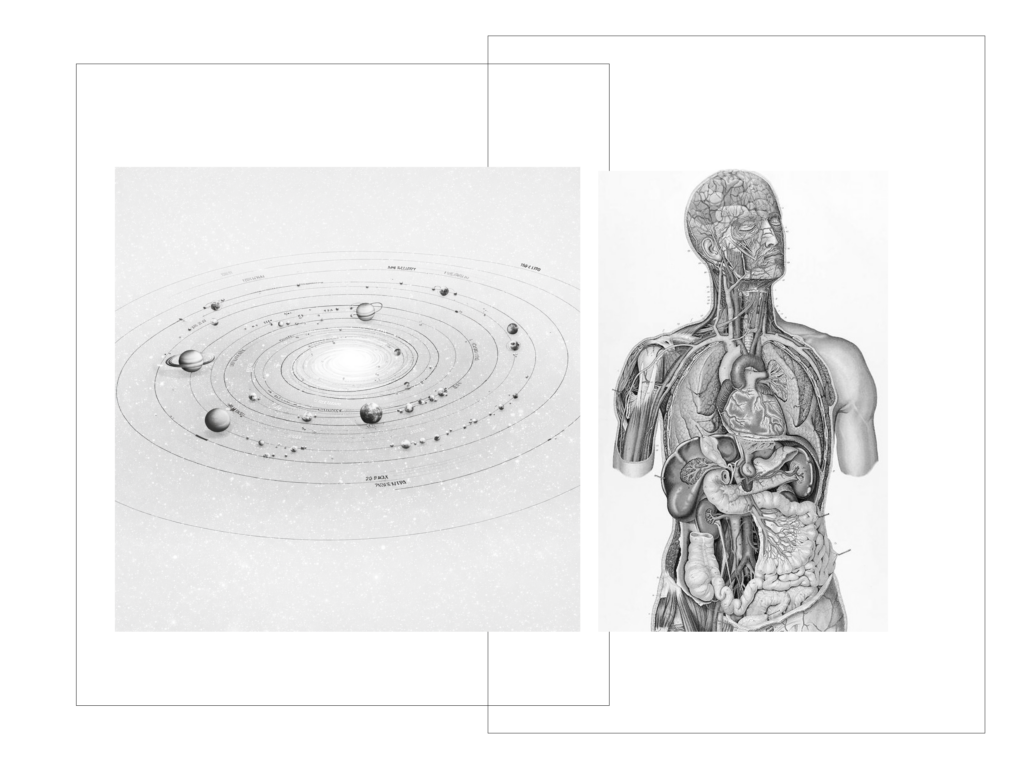
    I think understanding the complexity of our solar system can help to understand the systems inside of us humans as well. 

    Sounds stupid?

    Let’s do a little thought experiment. 

    Are you up? 

    Begins here:

    1. Imagine the universe. All the planets and stars in the solar system! 
    2. Then imagine a human body. All the things it carries inside of it! 


    Good. NEXT: 

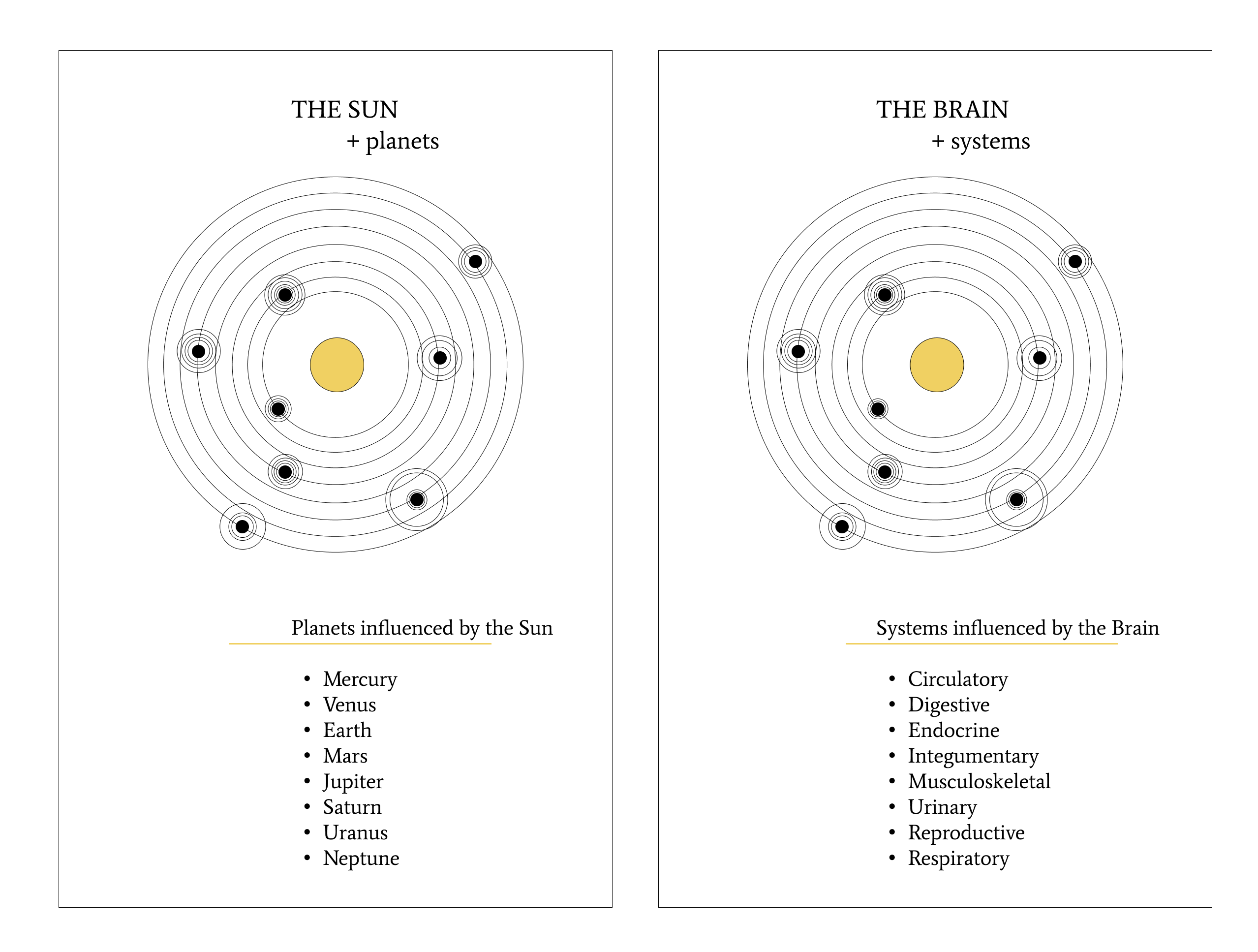
    3. Imagine your own Brain as a top center connected to all other systems of your body. 

    4. Think about the Sun as the center for all the planets of the solar system. 

    Great, now you melt both of the systems together! What do you see?

    Your body becomes your universe, your brain becomes your own sun and all your organs become your planets now. It is a little bit cool, don’t you think? 

    Well, the experiment is ending here and to clarify: I do not mean to say the planets have to do anything with the systems your human body carries. I simply wanted to help you visualise (and I choose the universe because I love it). It is to help, not to say you are the universe or anything more! …

    Ok, look here are 5 points. Now: Please make sure you get them all correct:  

    1. The universe and all the creatures in it (eg: us humans) developed without us interfering. We DID NOT take part of any of its inventions.
    2. Every human is able to have an impact on (not the solar but.. ) its own System. Which means that, you are right now are in the position to control the universe inside of you.
    3. No one is able to see nor understand our human system by only looking at a human body.  If you want to see inside a human you need a tool. Same as you need a tool to see to see all the planets and stars of the solar system.
    4. Any changes in the Sun’s heat, speed, or rotation would profoundly impact the entire solar system and dynamics across all planets and have very catastrophic impacts for the life we are living. If you now replace the sun with a brain (as we just did in the experiment), the effects can be similarly catastrophic, on the individual itself, its dynamics, and other people in its environment.
    5. We as humans do not have an impact on the suns speed nor can we control any of the planets in our solar system or even bigger universe.

    AND NOW, back to the beginning: 

    Why do we have to sleep?

    Do you feel you can answer this question now? Or are you more like: “Well, what? Are you saying we have to sleep because we are just made like this? And your answer is simply: Because we are designed for it?

    Yes. Either you take and accept it or: If you are not satisfied by the answer, don’t worry, there is a lot more to know! You can continue reading about it very soon!

    LAST NOTE:

    There is no need to do anything crazy with the information you are getting here!

    No need to change who you are or your life. I simply want you to be aware about some things, and I am certain that, a little bit more knowledge can be very beneficial for this world. 

    “Understand your own system before going any further. Many people live a whole life without realizing how they function. I see a problem there, and I’d Iove to fix that”.

    People studied many things and are still doing it, so that, by now, we only need to learn and understand about it. Yes it is still a bit of work but, at least you don’t need to figure it out all by yourself and, another good thing is, I am ging to help you. So you only read, and ask if something is unclear to you. 


    Research References: 

    Foster, R. G., & Kreitzman, L. (2014). The rhythms of life: What your body clock means to you! Experimental Physiology, 99(4), 599–606. https://doi.org/10.1113/expphysiol.2012.071118.

    Cajochen, C., Zeitzer, J. M., Czeisler, C. A., & Dijk, D. J. (2000). Dose-response relationship for light intensity and ocular and electroencephalographic correlates of human alertness. Behavioural Brain Research, 115(1), 75–83.https://doi.org/10.1016/S0166-4328(00)00236-9

    Panda, S. (2016). Circadian physiology of metabolism. Science, 354(6315), 1008–1015.https://doi.org/10.1126/science.aah4967

    Roenneberg, T., & Merrow, M. (2016). The circadian clock and human health. Current Biology, 26(10), R432–R443. https://doi.org/10.1016/j.cub.2016.04.011


    *Yes the sun is considered a star, a giant, luminous ball of hot gas what generates its own light and heat through nuclear fusion. It is a massive, 4.6 billion-year-old hot ball of plasma, primarily composed of hydrogen and helium, held together by its own gravit, serving as the center of our solar system.

  • About living life ‘right’

    About living life ‘right’


    you can become anything you want
    Wenn das zu Wodka werden kann, dann kannst du alles werden.

    Actually, it is really not that crazy.. Yes, I know life can sometimes feel incredible hard to master and when you try to manage it, suddenly everyone knows the best ways to live. The whole web is full of advises like:

    ‘The 10 best ways to master …’, or ‘The 3 habit rule to …’ or  ‘6 steps for …’ and ‘9 simple things to …’ and ‘Follow this to get the most out of … ‘ or ‘5  Tips to …’ and ‘5-4-3-2-1 exercise for …’

    Aren’t you sick of this phrases?
    Well, I am.

    All they give you is: Rules. Things like: Do this, but don’t do that. Behave like this but not like that and if you want to be successful say this not that. Uff.. 

    I think, it is not about giving you rules you have to follow. We already see in children: rules don’t work! What works is to empower each individual and create an understanding so that in the end you do ‘things’ because you want to and not because you get told to. I really believe in us humans but, you have to believe too. So that, at some point we are all able to create our own life, in exactly the way we want it. 

    “It is about educating, teaching and understanding, not about giving rules ‘how to live your life’.. this last decision is really just your own!”

    So, I have this 4 things to share for the beginning: 

    1. Your life. Your control. 100%

    Isn’t life actually pretty simple in the end? Be honest. Lets brake it down: 

    ‘You are born and you die’.

    That is the basic. 
    The time in-between birth and death you are alive. You can decide to finish your life at any point or you decide to live it until life decides it to end. Thats all. It is your life, your actions your words, your full control. (That is the fact given that you are over 18 years old).
    .. Yes, this still applies for horrible situations, like for eg. if you are badly controlled by people around you.., in the end, it is still you inside your body, right? Never forget that. It is still you who decides what to say or what to do. Sometimes, people forget that and this can be very dangerous.

    So, make sure you always remember Nr. 1: It is your life and your control: 100%.

    2. Don’t let anyone scare you OR TELL YOU how to live

    (Remember Nr.1)

    Look: Not many things kill you right away!
    … In these times (we are living in the year 2026), People tend to scare others to make them follow, to keep them silent or to have them behave in a certain way (I am very honest here and: I hate that).  I believe in freedom and I think each of you has the right to feel free. 

    Let’s brake it down again:

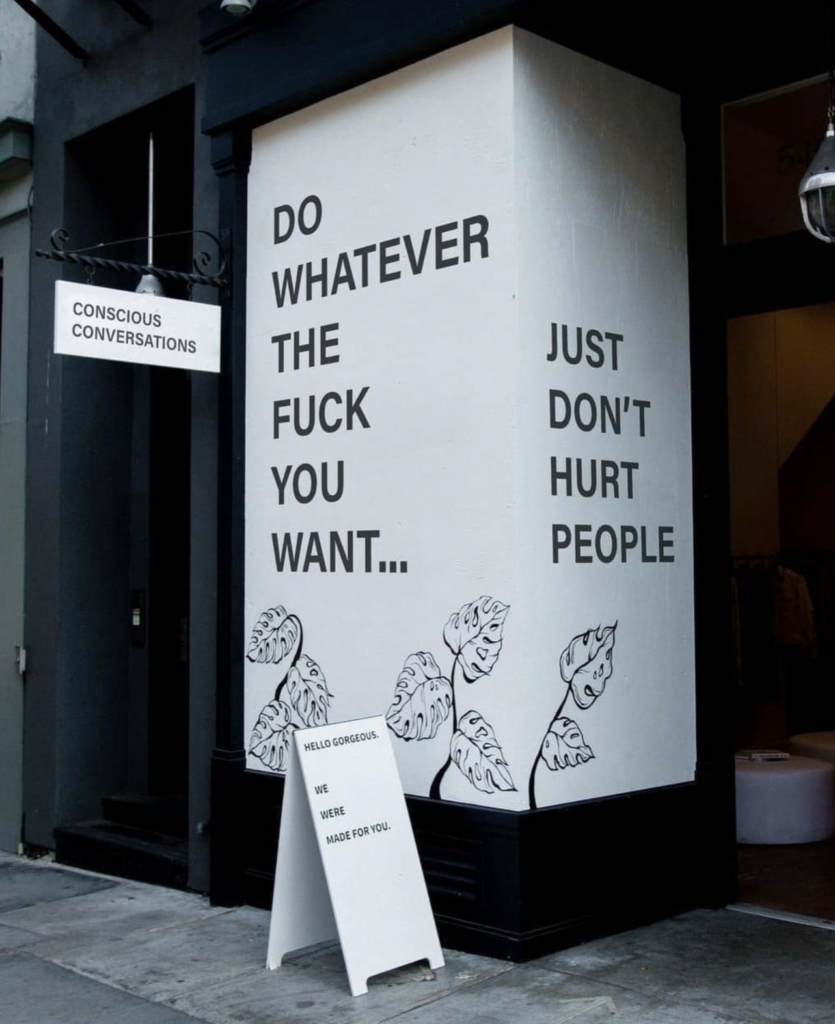
    As long as you don’t hurt anyone (including yourself), you can do whatever you want! No need to follow anyone.

    Furthermore:
    There is no need to become the happiest person on this planet. It is OK to be silent and calm. Stop putting so much pressure on yourself to feel happy. Let it come naturally. Trust me. Calm down. Re -fucking- lax.

    To clarify:
    I don’t mean to say, don’t do things! Of course it is important to do something. Every animal you see does something, constantly and consistently. Yes, sleeping is also A THING. (We spend about one-third of our lives sleeping, it is not lazy, it is not a problem). It is because we are designed to sleep and be awake, like every other animal on this planet as well. Sleep is very important to be a good human. Many people are sleep deprived without even knowing it. (Read more about sleep and the science behind it here: Body & Science )

    For now only understand: 

    Mach einfach was du willst, tu nur niemandem dabei weh.

    So, let’s jump into it:

    Körper sind nicht für immer, aber so cool, dass wir überhaupt einen Körper bekommen.

    3. Never stop educating yourself

    Do you understand how smart you are?
    Yes you! …and me, and your neighbour!

    Yes, smart.
    There are different kinds of being smart, actually there are so many types of being smart! And you know what? Each of them is smart! BECAUSE each of us has their own way of being smart.
    Accept it.

    No, you don’t believe me? You think there is only one way to be smart? Ok (… don’t be hard on yourself for “IUKImportant Unknown Knowledge) but lets change it, let me give you an idea, look:

    DIFFERENT WAYS OF BEING SMART:

    (I can find more if you challenge me but I am confident,  the following will open your eyes already)

    Adaptability smart, Aesthetic smart, Analytical smart, Attention-management smart, Behavioral smart, Bias-aware smart, Big-picture smart, Bodily-awareness smart, Bodily-kinesthetic smart, Brain-based smart, Boundary-setting smart, Business smart, Business-strategy smart, Cognitive-flexibility smart, Communication smart, Conceptual smart, Contextual smart, Creative smart, Critical-thinking smart, Cultural smart, Decision-making smart, Design smart, Digital smart, Emotional smart, Empathic smart, Entrepreneurial smart, Environmental smart, Ethical-reasoning smart, Existential smart, Expressive smart, Financial smart, Imaginative smart, Information smart, Innovative smart, Interpersonal smart, Intrapersonal smart, Intuitive smart, Judgment smart, Learning smart, Leadership smart, Linguistic smart, Logical smart, Mathematical smart, Media smart, Metacognitive smart, Moral smart, Musical smart, Naturalistic smart, Organizational smart, Pattern-recognition smart, Performance smart, Philosophical smart, Practical smart, Problem-solving smart, Psychological smart, Rhetorical smart, Risk-assessment smart, Scientific-thinking smart, Self-regulation smart, Sense-making smart, Social smart, Spatial smart, Strategic smart, Systems-thinking smart, Tactical smart, Teaching smart, Technical smart, Technological-literacy smart, Temporal smart, Theoretical smart, Time-management smart, Tolerance smart, Translational smart, Value-based smart, Visionary smart, Visual smart, Vocational smart, Wellbeing smart, Willpower smart, Wisdom-oriented smart, Work-ethic smart

    Do you get the idea?

    We are more than 8.000.000.000 (Eight Million) people living on this Planet and, of course there is not only 1 way to be smart!

    Many of us forget to educate themselves after school… even tho this is somehow actually only the start, because from this point onwards… you educate yourself in what YOU want and whatever you feel attracted to..  there are no limits! Learn, grow and age. It feels good. It’s important. You have a brain, use it! You are a personality, create it! (Simply find out which smart is yours..)

    Ready for the last one? Alright, lets go:

    4. Share (-ing is caring)

    The things you are smart about. It is important to share them!

    “With who? And why?”

    Mh, you can share it with your neighbour?
    OR: With your mum, dad, siblings friends, people in shops, with people you work, people you meet, people on the street, people online, nature or other animals.

    It is your choice (again) with who you share, just make sure you don’t forget it! 

    Why?

    Because, we NEED ALL different types of being smart! We need every single brain, Like we need all the different types of carrots! If we forget about this, about being special.. we might one day, end up with only 1 typ of carrot left or 1 type of human!!!!!!!!!!

    It is crucially important to keep every individual alive and therefore continue learning, growing and sharing your very own mind!

    No need to share with the whole world, no need to write a blog. Simply share with the people around you. Trust me, everyone can give you something back.

    Of course, you will meet people with similar knowledge or interests because even within 1 specific type of being smart, there are different brains and therefore different knowledges about it. (Like: The carrots of one species (lets take the orange one) might look all the same at first but once you look closely, you see, they are all different! In their very own way! Thats important, to understand and to acknowledge as well.)

    Passt aufeinander auf

    Sharing is not only about physical things like food, water, shelter or money, it is also about knowledge, thoughts, ideas, care and love. There are things you can share, without owning or giving away something materialistic. 


    Personal last note: 

    I truly believe that we can make this world amazing and that each of us has the power to be great! Guess what: If you don’t harm anyone (including yourself) and you share your knowledge (with love) to others around you, you are already amazing! And yes: Thats enough for a human life! That is simply enough. 

    If you struggle feel free to reach out to me!
    I’d love to listen to you (r why)! 

    All the best!,  

    W. J.

enEnglishEnglish