
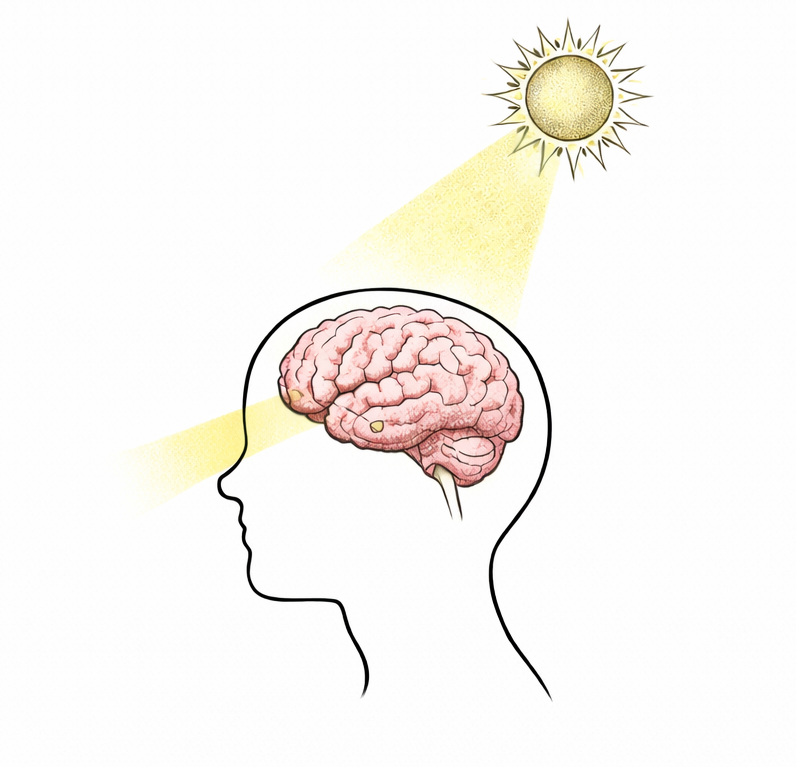
Erinnerst du dich, was sie dachten, dass wir in der Schule an Pflanzen anknüpfen, die Sauerstoff, Wasser und Licht brauchen, um zu wachsen und zu blühen? Interessante Tatsache: Wir Menschen brauchen das auch!
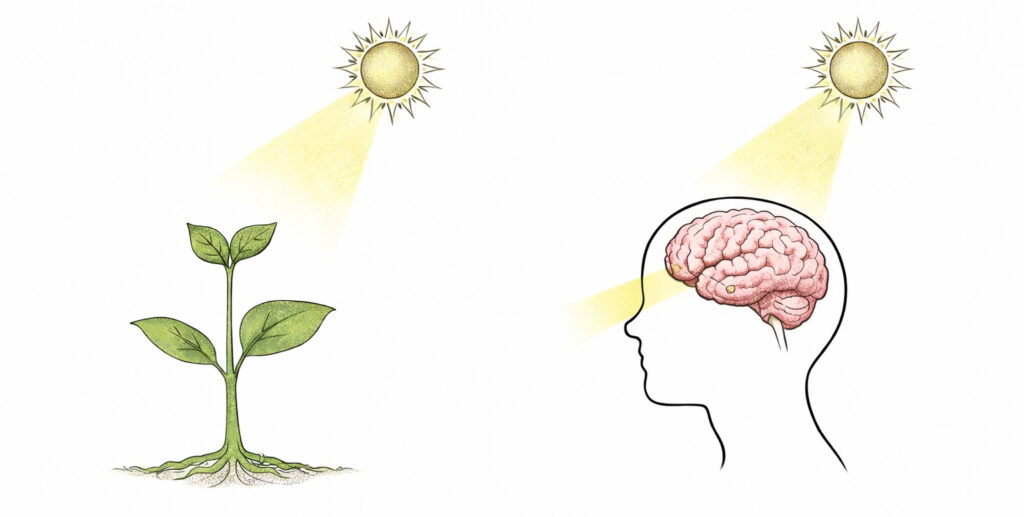
Es gibt natürlich einen Unterschied zwischen Mensch und Pflanzen, aber am Ende brauchen wir beide Licht, um gut zu funktionieren.
Eigentlich sind Sie viel mehr mit diesem Planeten verbunden, als Sie es mögen und je mehr Sie damit leben, desto besser Sie funktionieren, und desto besser funktionieren Sie, desto besser funktioniert Ihr Körper und desto besser funktioniert Ihr Körper..
Licht → Augen → Gehirn
Denken Sie daran, es gibt diese Uhr in Ihrem Gehirn und die Zellen in unseren Augen, die Licht erkennen? Wenn nicht, können Sie hier nachlesen: Warum wir schlafen müssen.
Weißt du was, es hört nicht auf. Der Rhythmus geht weiter, und der ganze Weg sieht tatsächlich so aus:
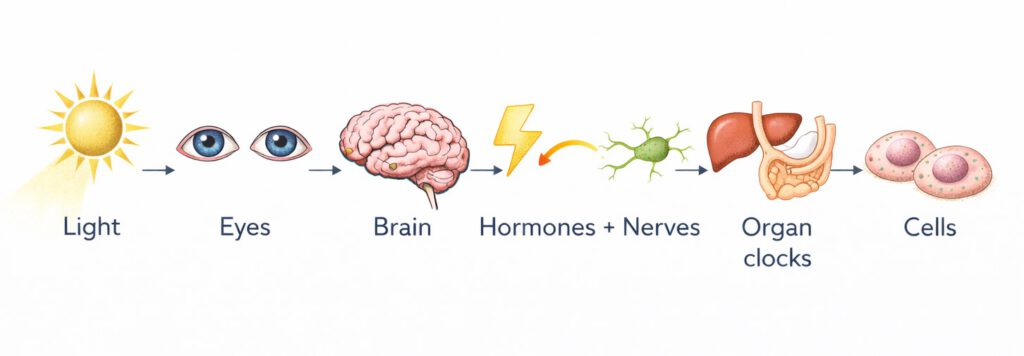
Denn das Warum wir schlafen müssen Post bereits erklärt über Licht, über Ihre Augenzellen und Ihre Gehirnuhr. Hier geht es nun um Hormone:
"Das Licht, das durch meine Augen in mein Gehirn kommt, reguliert meine Hormone?"
"Ja, irgendwie."
"Welche Hormone?"
"Lassen Sie sehen..."
Hormone reisen durch unser Blut, Hormone regulieren unsere Energie, unsere Stimmung und wie sich unser Körper im Laufe der Jahre verändert. Besonders 2 wichtige Hormone werden davon beeinflusst, wie und wann wir Licht sehen. Sie haben wahrscheinlich schon davon gehört ..
Melatonin (Schlafhormon) UND
Cortisol (Wake + Stresshormon).
Um dies zu verstehen, ist es wichtig zu wissen, dass Ihre Augenzellen in der Lage sind, die Lichtfrequenz in der Atmosphäre zu lesen und dass helles Tageslicht reich an Kurzwellenlängen ist:
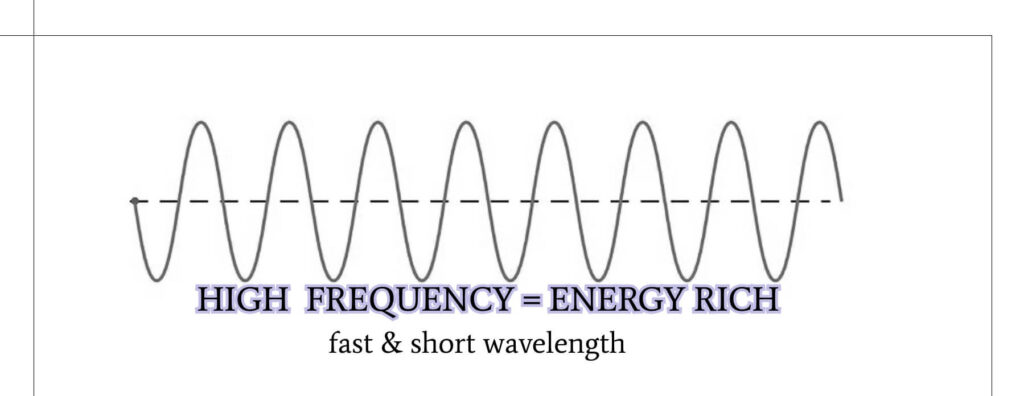
Wenn Sie also helles Licht sehen, reagieren Ihre Augenzellen darauf wie folgt:
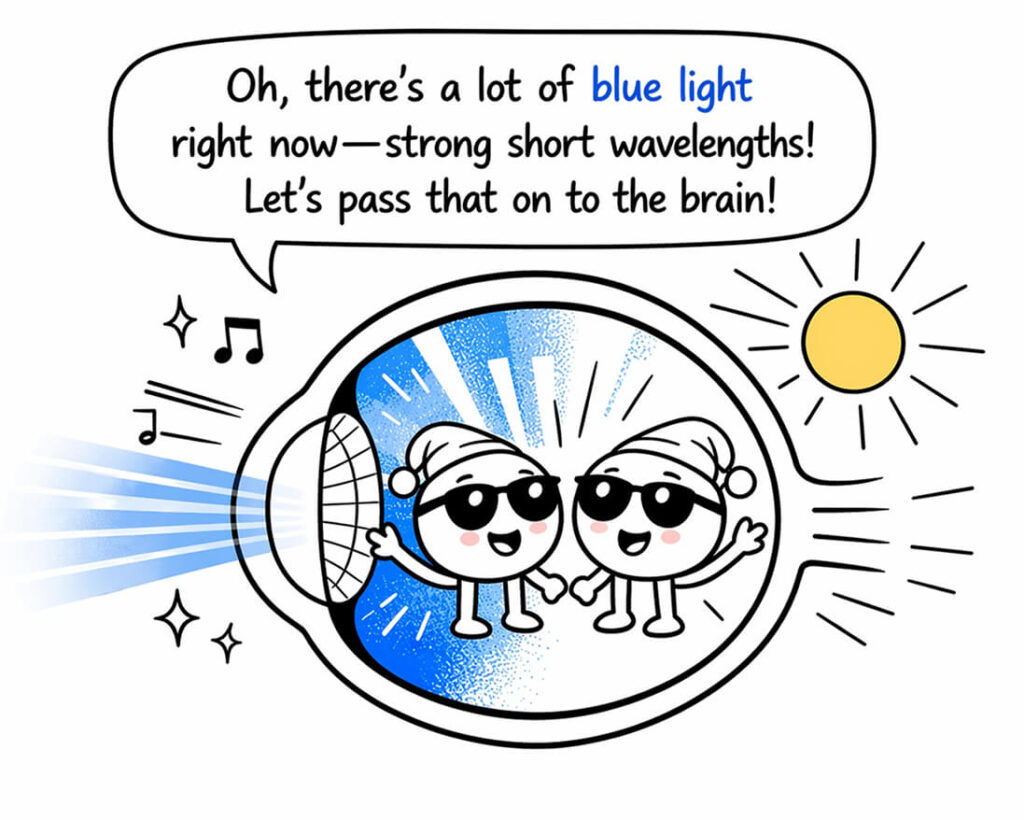
Dein Brian verbreitet die Informationen an deinen Körper: Lass uns gehen! Wach auf. Der Tag ist gekommen, beginne deine Aufgabe! Und dein Körper wird beginnen und...
- ... Wachsamkeit erhöhen
- ...Anstieg der Körpertemperatur
- ... das Cortisol erhöhen
- ... Ihre interne Uhr für den Tag synchronisieren und
- ...die Melatoninproduktion stoppen
Je heller das Licht ist, das du siehst, desto stärker ist deine Körperreaktion darauf. Um es ganz einfach zu sagen:
"Wenn Sie mitten in der Nacht aufwachen und helles Licht sehen, wird es Ihrem Gehirn signalisieren, dass es tagsüber ist und Ihr Körper anfangen möchte, seine täglichen Aufgaben zu erledigen."
"Ist das, warum, wenig helles Licht am späten Abend und am Telefon in der Nacht ... ist ein Problem?"
"Ja."
Sie könnten jetzt argumentieren: "Aber ich weiß, dass es Nacht ist!"
"Dennoch wird es Ihre Körperreaktion auf eine äußere Influekne nicht verändern." Dein Körper ist eine Maschine. Es ist gemacht, um auf eine bestimmte Weise zu arbeiten, und Sie können dies nicht mit Ihren Gedanken ändern.
Schauen Sie, vielleicht hilft das: Wenn die Sonne untergeht und dann sehr, sehr stark, denkt man daran, dass die Sonne wieder aufgeht. Wird es das? Nein, es gibt Muster und Rhythmen, die wir nicht ändern können, indem wir einfach darüber nachdenken. Es gibt bestimmte Mechanismen und wys die Welt und wir Menschen arbeiten und weil wir studiert haben, wissen wir über diese Dinge bis heute.
Hier sind ein paar wichtige Dinge, die Sie beachten sollten, wenn es um die Qualität des Lichts geht:
Nicht jedes blaue Licht wirkt gleich; es gibt einen enormen Unterschied zwischen künstlichem und natürlichem Licht. Das hellste Licht das wir Menschen in Innenräumen erzeugen könenn liegt bei 100–1.000 Lux. Natürliches Tageslicht hat eine Stärke von 10.000–100.000 Lux. Du siehst also: Kein Licht ist so wirksam wie echtes Licht und wir sind nicht in der Lage, dieses Licht künstlich nachzuahmen. Aber: Wir können ja nach draußen gehen und es auf natürliche Weise auf unseren Körper scheinen lassen.
Es ist von entscheidender Bedeutung, dass Sie gute Qualität Licht an Ihre Gehirnuhr am Morgen kommuniziert, weil ohne genug Qualitätslicht Ihre Melatonin Produktion nicht richtig ausgeschaltet und Ihr für Cortisol nicht richtig starten kann.
"Wir wissen, basierend auf einer Menge von Beweisen, dass, wenn Sie nicht Ihre Cortisol- und Melatonin-Rhythmen rechtzeitig erhalten, gibt es enorm schlechte Auswirkungen auf Herz-Kreislauf-Gesundheit, Demenz, Stoffwechsel, Diabetes-Risiko, Fruchtbarkeits-Erlernen und Depression. "
Es ist wichtig, Qualitätslicht von außen zu bekommen, nur das Durchsehen von Innenlicht durch ein Fenster wird nicht die gleiche Qualität haben.
Das ist oft der Grund, warum sich Menschen im Winter müder und weniger aktiv fühlen. Das liegt nicht daran, dass sie „faul“ sind, sondern daran, dass sie nicht genug natürliches Licht erhalten. Das „Morgensignal“ fehlt, und deshalb fällt es dem Körper schwer zu erkennen, wie spät es ist und wann er müde oder wach sein sollte.
Wenn Sie aufwachen und direkt auf Ihren Computer oder Ihr Telefon oder ein anderes künstliches Licht schauen, werden Ihre Augenzellen aktiviert, aber nicht in einer guten Weise.
"Viele positive Dinge passieren, wenn wir unsere Uhr richtig machen. Wir wollen also so schnell wie möglich nach dem Aufwachen nach draußen kommen. Um sicherzustellen, dass unser Körper seine Arbeit in den besten Einstellungen machen kann."
"In Ordnung, ich weiß, wie ich meinen Körper richtig aufwecke, um mein System zu starten.", aber Wie wäre es damit, es auszuschalten? Kann ich dafür auch Licht verwenden?
"Ja." Sie können!
Lassen Sie uns schnell einen Blick zurück zu über ~ Vor 1 Million Jahren (1.000.000 Jahre), um etwas Wichtiges zu verstehen. Denn damals war es die Zeit, in der wir Menschen begannen, eine andere Lichtquelle neben Sonne oder Mondlicht zu verwenden.
Wir haben Feuer benutzt.
Feuer und Tageslicht waren lange Zeit die einzigen Lichtquellen, die wir Menschen hatten. Elektrische Glühbirnen nur um ~Vor 140 Jahren (... und ich bezweifle jetzt, dass wir jemals gut darüber informiert wurden.)
!INFO:
Feuer hat etwa 10 - 100 lx.
Sonnenlicht hat etwa 10.000 – 100.000lx !
Lux ist, wie hell Ihre Augen das Licht wahrnehmen, nicht seine Farbe, nicht die Temperatur, nicht die Wellenlänge.
Sonnenlicht hat einen vollen Lichtbereich von 400-700 nm:
Ultraviolettlicht: < 400nm
Blaues Licht: ~400-500 nm
Grünes Licht: ~500–570 nm
Rotlicht: ~620–700 nm
Infrarot: > 700 nm
Feuerlicht ist meist 600-700 nm + Infrarot (> 700 nm)
Nm ist die Abkürzung für ein Nanometer und wird verwendet, um sichtbares Licht zu messen.
Das menschliche Auge reagiert auf Wellenlängen von ~ 380 bis 380 ~ 750 nm.
Niederfrequentes, langwelliges Licht (wie Feuer und sehr warmes Licht) signalisiert dem Körper, dass es Zeit ist, sich zu entspannen und sich zu entspannen, und Ihr Körper wird dann:
- veringere die Wachheit,
- reduziere Cortisol,
- Synchronisieren der internen Uhr für den kommenden Schlaf
- Steigere die Melatoninproduktion
- Melatonin Release
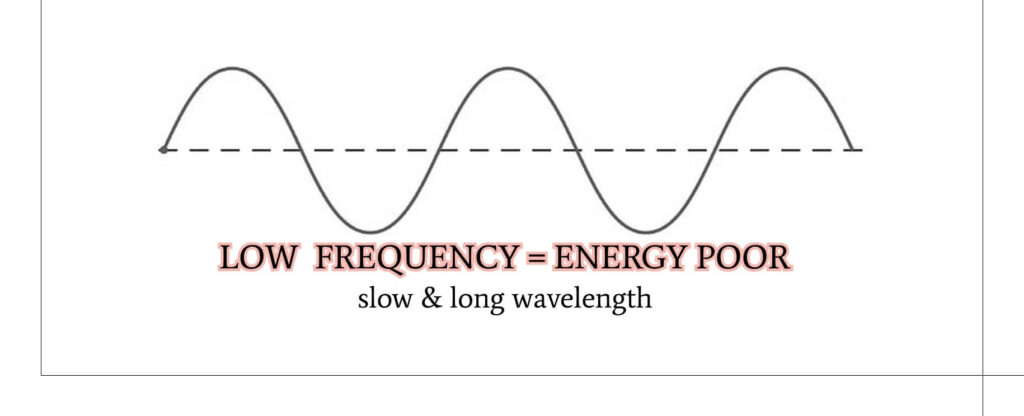
Ein schöner Sonnenuntergang, wenn der Himmel ganz rot wird, ist es ähnlich wie diese Wellenlängen des Feuers und die Zellen in Ihren Augen erkennen es und seien Sie wie:
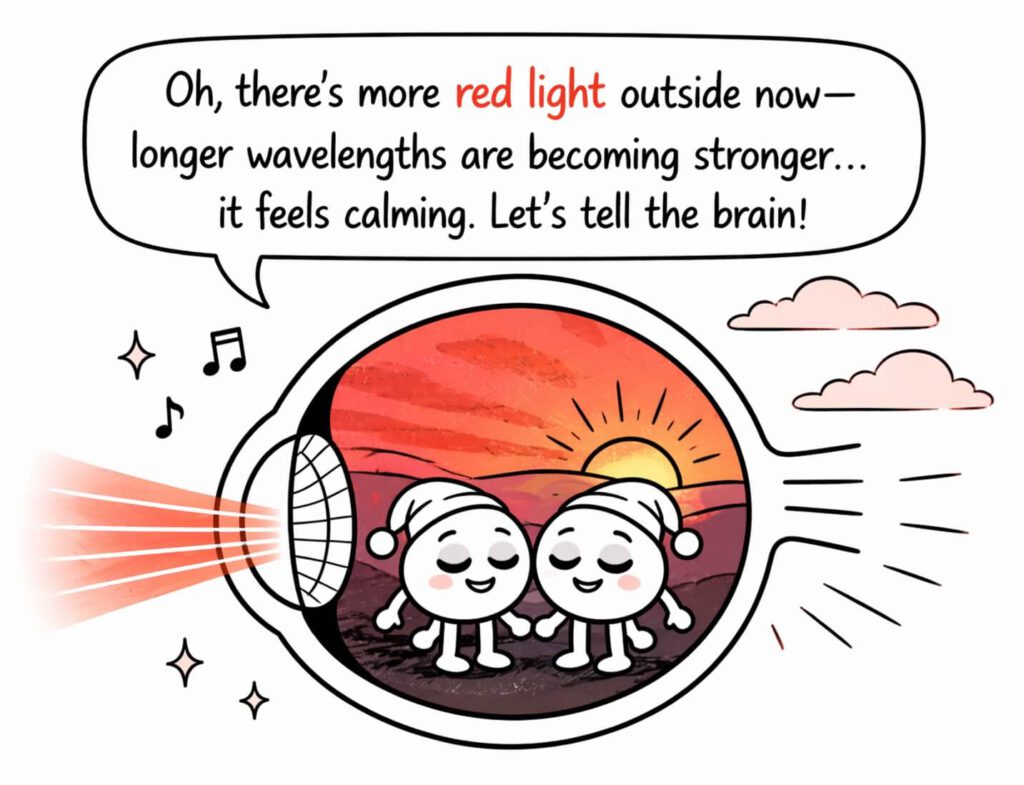
Das rote Licht von Sonnenuntergang und Sonnenaufgang ist ein Übergangssignal für Ihren Körper, dass eine Veränderung stattfindet. Entweder um aufzuwachen oder um sich auszuruhen und zu schlafen.
Jegliche Veränderungen, Störung oder Verschiebung kann dieses Gleichgewicht durcheinander bringen und zu einer Störung des Hormonhaushalts führen.
"Der tägliche Rhythmus der Sonne war immer da und es war immer dasselbe. Unser Hormonsystem ist also genau darauf aufgebaut. Unser ganzer Zyklus ist mit dem Sonnenzyklus verbunden."
Interessante Zusatzinformationen:
- Selbst wenn wir uns in völliger Dunkelheit befänden, würde dieser Zyklus weiterhin funktionieren. Denn nach dem Anstieg des Cortisolspiegels steigt der Melatoninspiegel (etwa 12 bis 14 Stunden später) auf ganz natürliche Weise an.
- Die meisten Nachtmenschen bekommen tagsüber einfach nicht genug Licht! Das bestimmt, wann man müde wird, und bildet die Grundlage für einen gesunden Schlaf! „Vielleicht hat dein Gehirn einfach nicht genug Sonnenlicht abbekommen.“
- Blinde Menschen (sofern sie noch Augen haben) verfügen weiterhin über die Nervenzellen, die die innere Uhr steuern. Es geht nicht darum, die Sonne direkt zu sehen und in die Sonne zu blicken! Die Nervenzellen in den Augen, die diesen Mechanismus auslösen, werden durch bestimmte Wellenlängen des Lichts in der Atmosphäre aktiviert. Sie werden auch dann aktiviert, wenn das Licht durch eine Wolkendecke dringt. Es geht also nicht darum die Sonne direkt zu sehen.
Zurück zu unseren Hormonen jetzt.
"Wir verstehen, dass Licht entweder hilft oder unsere Hormone Melatonin und Cortisol stört."
Und was tun sie in einem menschlichen Körper?
Cortisol hilft Ihnen, aufzuwachen, Ihre Körpertemperatur, Ihren Flüssigkeitshaushalt zu regulieren und Ihren Blutzucker in gesunden Bereichen zu halten.
Kurz vor dem Aufwachen steigt Ihr Cortisolspiegel auf natürliche Weise um bis zu 50-60% an und Sie fühlen sich wach, energetisch und wachsam. Cortisol erhöht leicht den Blutdruck und die Körpertemperatur.
Melatonin hilft Ihnen, abends müde zu sein und in einen Zustand zu kommen, der einen tiefen, erholsamen Schlaf unterstützt.
Kurz vor der Dunkelheit steigt Ihr Melatoninspiegel auf natürliche Weise an und signalisiert Ihrem Körper, dass es Zeit ist, sich zu beruhigen, sich schläfrig zu fühlen und sich auszuruhen. Melatonin reduziert die Körpertemperatur leicht, hilft, die Wachsamkeit zu senken und unterstützt Sie beim Einschlafen.
Licht (insbesondere helles blaues Licht) verstärkt Cortisol.
"Daher beobachten Sie den Sonnenaufgang oder in der Regel helles Sonnenlicht nach dem Aufwachen, unterstützt Ihren Körper, um richtig aufzuwachen und Ihren Cortisol-Rhythmus auf die beste Weise zu beginnen!"
Licht (besonders ruhiges, warmes, gelbes Licht) verstärkt Melatonin.
"Deshalb den Sonnenuntergang zu beobachten, Lichter am Abend zu dimmen und Overhead-Lichter zu verwenden (denke daran, Overhead-Licht in der Nacht ist einfach nicht natürlich!), Hilft Ihrem Körper, sich zu beruhigen und in dieser Nacht erholsam zu schlafen."
AWAY:
Cortisol am Morgen = gut (fühlst du dich wach)
Cortisol am Abend = schlecht (fühlt sich wach)
Melatonin am Morgen = schlecht (macht Sie schlafen wollen)
Melatonin am Abend = gut (macht Sie schlafen wollen)
"Eigentlich passiert aufgrund einer Menge sehr schlecht platzierter Innenbeleuchtung eine Störung dieser beiden Hormonrhtumnen schneller, als Sie vielleicht möchten, und viele Menschen haben dadurch Probleme."
- Lichtstörungen verursachen Veränderungen im Stoffwechsel. (1)
(1) Stoffwechsel: Die drei Hauptfunktionen des Stoffwechsels sind die Umwandlung von Energie aus der Nahrung, die Aufspaltung der Nahrung in ihre Bausteine und die Ausscheidung von Abfallstoffen. Deshalb kann Schlafmangel zu Erkrankungen führen, wie zum Beispiel: Gewichtszunahme, Depressionen, Müdigkeit, Immunschwäche, Fruchtbarkeitsprobleme und ein erhöhtes Diabetesrisiko. - Das Verhalten des Betrachtens von blauem Licht in der Nacht (11 bis 4 Uhr) ruft die Habenula an. (2)
(2) Habenula: Eine Gehirnregion,die bekannt ist als "Emotions Kontroll Zentrum und als Brücke zwischen dem limbischen System und dem Mittelhirn. Das Verhalten Licht in der Nacht zu betrachten kann die Enttäuschungszentren im Gehirna aktivieren, den Dopaminspiegel senken und depressive Gedanken am folgenden Tag verstärken - Unzureichende Exposition gegenüber natürlichem Licht wurde mit SAD verbunden. ***(3)
(3) SAD: Saisonale affektive Störung, ist eine Form von Depression, die zu bestimmten Jahreszeiten auftritt, häufig in den dunkleren Monaten. Die geringere Menge an Tageslicht im Winter (und der Aufenthalt in geschlossenen Räumen) wirkt sich negativ auf den Tagesrhythmus und die Vitamin-D-Aufnahme aus.
Schauen Sie, denn ich bin nicht nur ein Fan von Forschung, sondern auch von Schlussfolgerungen, um das Leben besser zu machen. Hier sind meine Lösungen:
Holen Sie sich natürliches Licht nach dem Aufwachen, um Ihr System richtig einzustellen. Beobachten Sie den Sonnenuntergang, um Ihrem Körper zu sagen, dass es Abend ist. Dimmen Sie Ihre Lichter nachts, um gut zu schlafen und im Gleichgewicht mit Ihrem natürlichen Rhythmus zu sein.
"Es könnte schlimmer sein, oder?"
Ich liebe dich, bitte mach dasselbe.
Wanda J.
BONUS-Wissen:
- Die Glukosetoleranz erreicht tagsüber ihren Höhepunkt und ist während der Dunkelphase am niedrigsten.
- Der Melatoninspiegel sinkt bei Sonnenaufgang und steigt bei Sonnenuntergang an
- Der Cortisolspiegel steigt kurz nach Sonnenaufgang an
- Schlaf vertieft sich um 1:00 Uhr
- Die Körpertemperatur steigt um 3:00 Uhr
- Mit dem sehen eines einzelnen Sonnenaufgangs kannst du deine Uhr um mehrere Stunden vor- oder zurückstellen! (Das kann auf Reisen zwischen verschiedenen Zeitzonen hilfreich sein.)
Quellenangaben:
Dantas, F.M., Oliveira, M.L.P., Luzardo, R., Araujo, J.F. and Silva, A.C. (2025) ‘The role of sunlight in sleep regulation: analysis of morning, evening and late exposure’, BMC Public Health, 25, Artikel 3362. doi:10.1186/s12889-025-24618-8.
Dijk, D.-J. and von Schantz, M. (2005) ‘Timing and consolidation of human sleep, wakefulness, and performance by a symphony of oscillators’, Journal of Biological Rhythmen, 20(4), S. 279–290. doi:10.1177/0748730405278292.
Dunster, G.P., Hua, I., Grahe, A., Fleischer, J.G., Panda, S., Wright, K.P. Jr., Vetter, C., Doherty, J.H. and de la Iglesia, H.O. (2022) ‘Daytime light exposure is a strong predictor of seasonal variation in sleep and circadian timing of university students’, Journal of Pineal Research, 74(1), S. e12843. doi:10.1111/jpi.12843.
Franzago, M., Alessandrelli, E., Notarangelo, S., Stuppia, L. and Vitacolonna, E. (2023) ‘Chrono-nutrition: circadian rhythm and personalized nutrition’, International Journal of Molecular Sciences, 24(3), Artikel 2571. doi:10.3390/ijms24032571.
LeGates, T.A., Fernandez, D.C. and Hattar, S. (2014) ‘Light as a central modulator of circadian rhythms, sleep and affect’, Aktuelle Biologie, 24(10), S. R461–R473. doi:10.1016/j.cub.2013.06.039.
Rao, F. and Xue, T. (2024) ‘Circadian-independent light regulation of mammalian metabolism’, Naturmetabolismus, 6, S. 1000–1007. doi:10.1038/s42255-024-01051-6.
Huberman Lab (no date) Dr. Glen Jeffery: Using red light to improve metabolism. Verfügbar unter: https://podcastnotes.org (Zugang: 7. April 2026).
Max-Planck-Institut (kein Datum) Translational sensory and circadian neuroscience. Verfügbar unter: http://www.kyb.tuebingen.mpg.de (Zugang: 7. April 2026).
MDPI (kein Datum) Hormonal regulation and circadian processes. Verfügbar unter: http://www.mdpi.com (Zugang: 7. April 2026).
NCBI (2023) Circadian rhythm and the 24-hour clockVerfügbar unter: http://pmc.ncbi.nlm.nih.gov (Beitritt: 7. April 2026).
Osmio Water (no date) Sunlight and health. Verfügbar unter: http://www.osmiowater.co.uk (Zugang: 7. April 2026).