
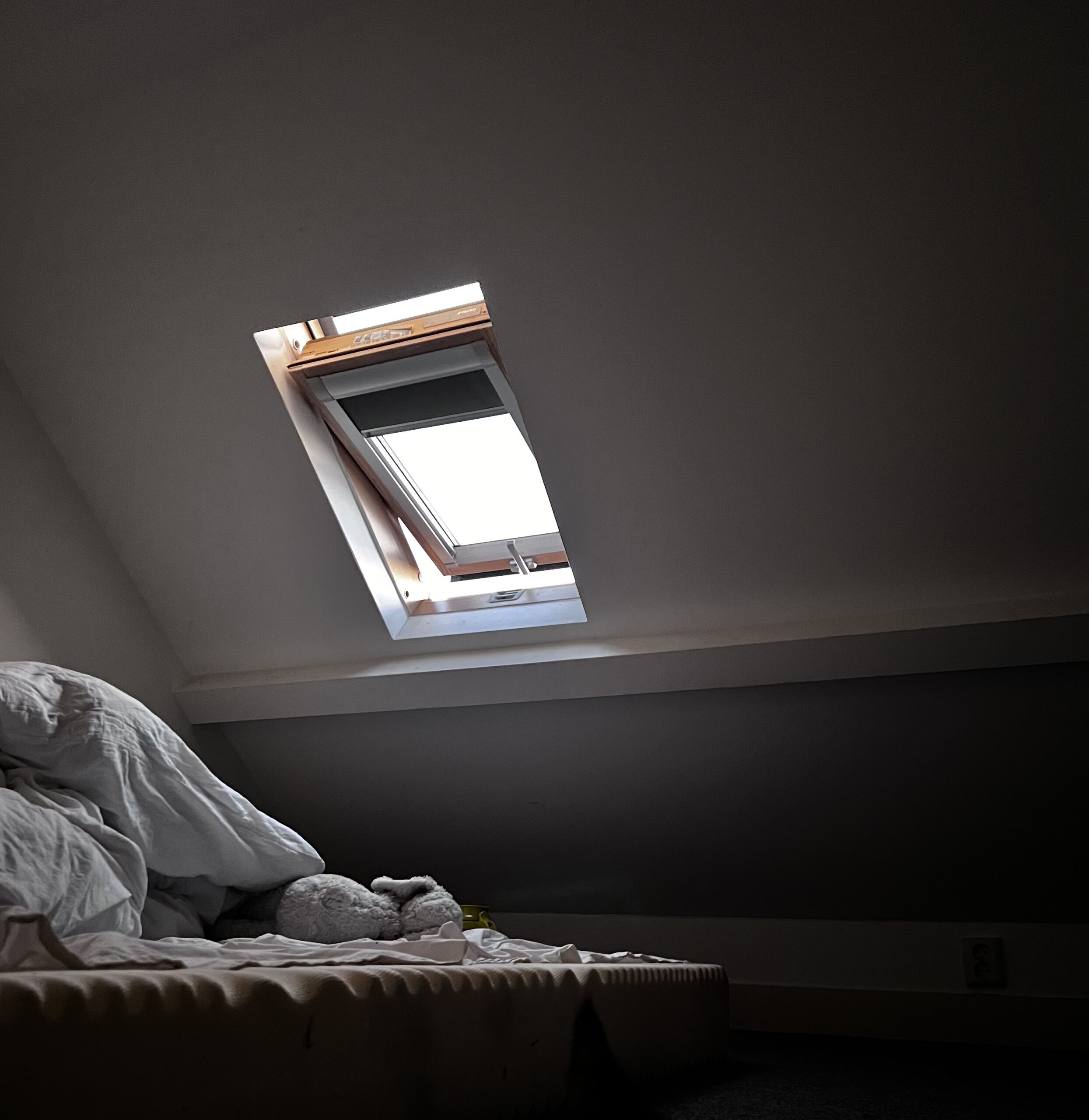
And how much control do we actually have?
The following is about a ~ 6 minute read
YOU CAN DO IT!
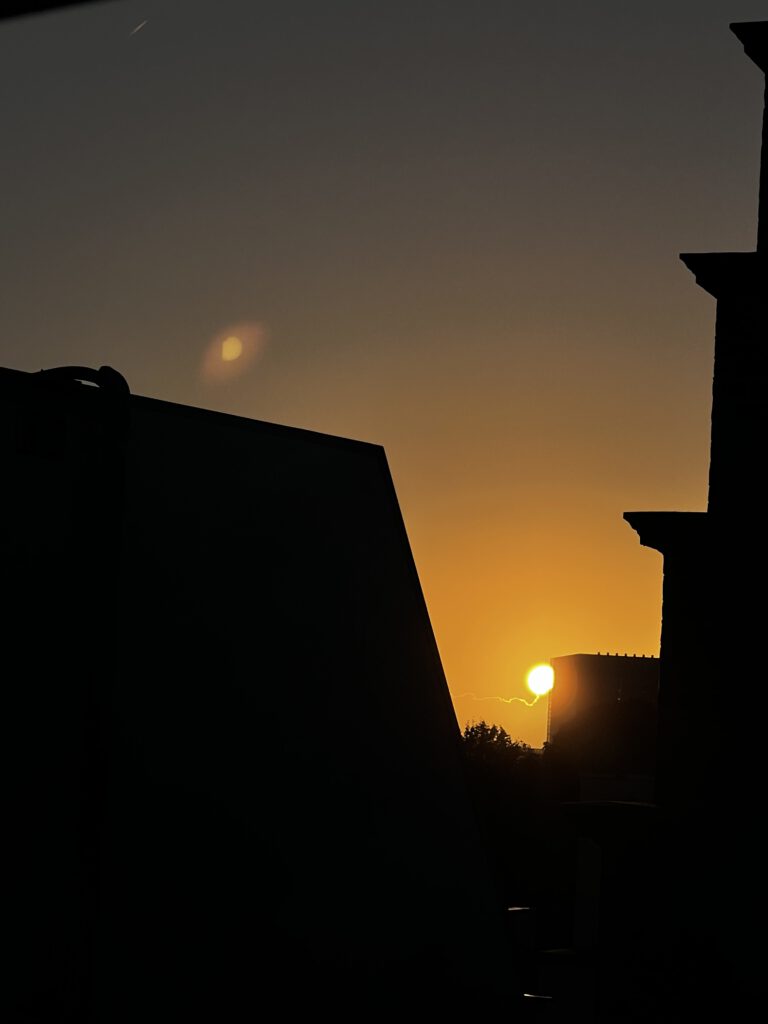
Let’s look at the sun again
yes, I love her a lot!
The sun is much older, bigger and more powerful than you are and it has its very own rhythm (which, by the way, rotates slower than the earth but its surface moves faster).
Well, for us it seems that the sun comes up every morning and goes down every evening, right?
Actually the sun coming and going is because we are spinning too!
Sounds weird?
You think you don’t have a natural rhythm which you follow?
And what, if I tell you that, through studying living creatures on this planet, we found out that:
“Most animals, plants, even fungi have a natural rhythm, it is a cycle each one follows. There are only very few microbes and deep-sea organisms which don’t follow a typical rhythm.”
Up to today we humans, as a species discovered many things through observing ourselves, other living organisms and the world around us. We understood that almost all living creatures follow internal biological rhythms, and that the way ‘we humans spin’ is shaped by interactions between our brain, biology, and the environment we are located in.
MAKE SURE TO understand:
The rhythm we (all) follow is as old as we, as a species, are and is primary coordinated by: Star-light! Not just any starlight, it is governed by (in my opinion the coolest star out there): our Sun! **
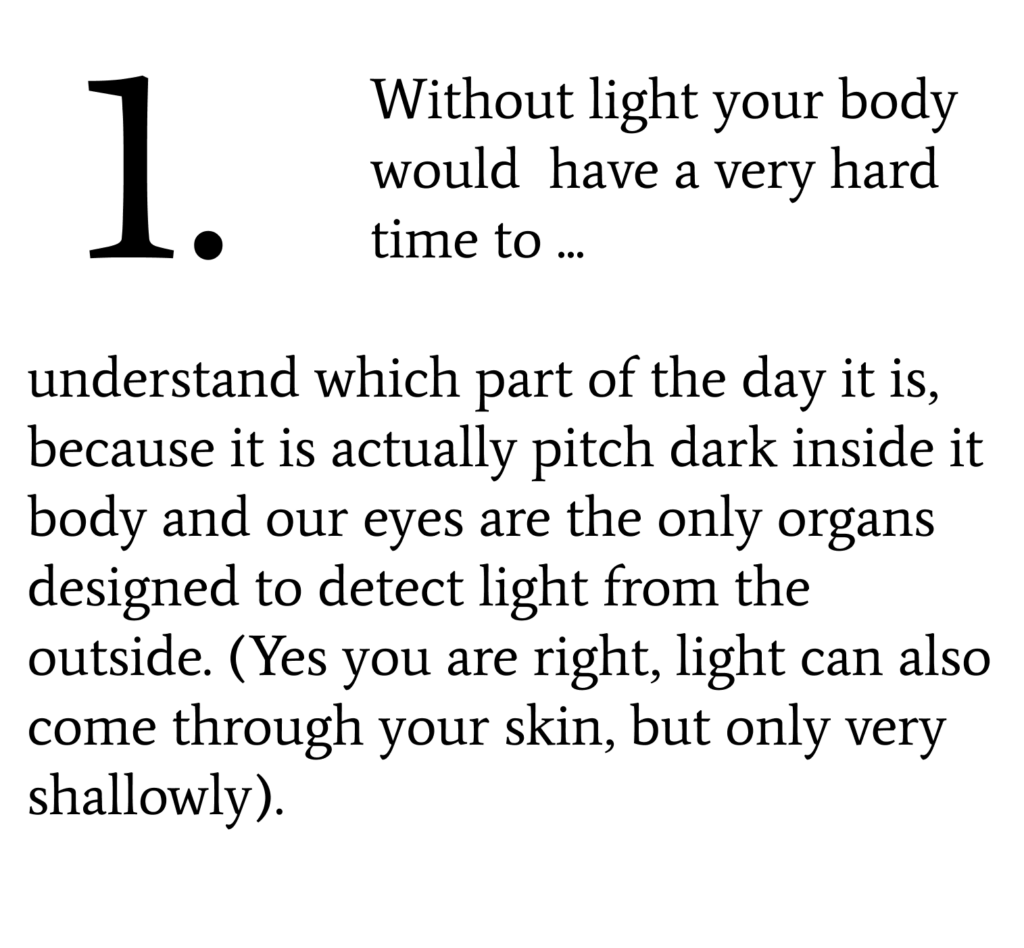
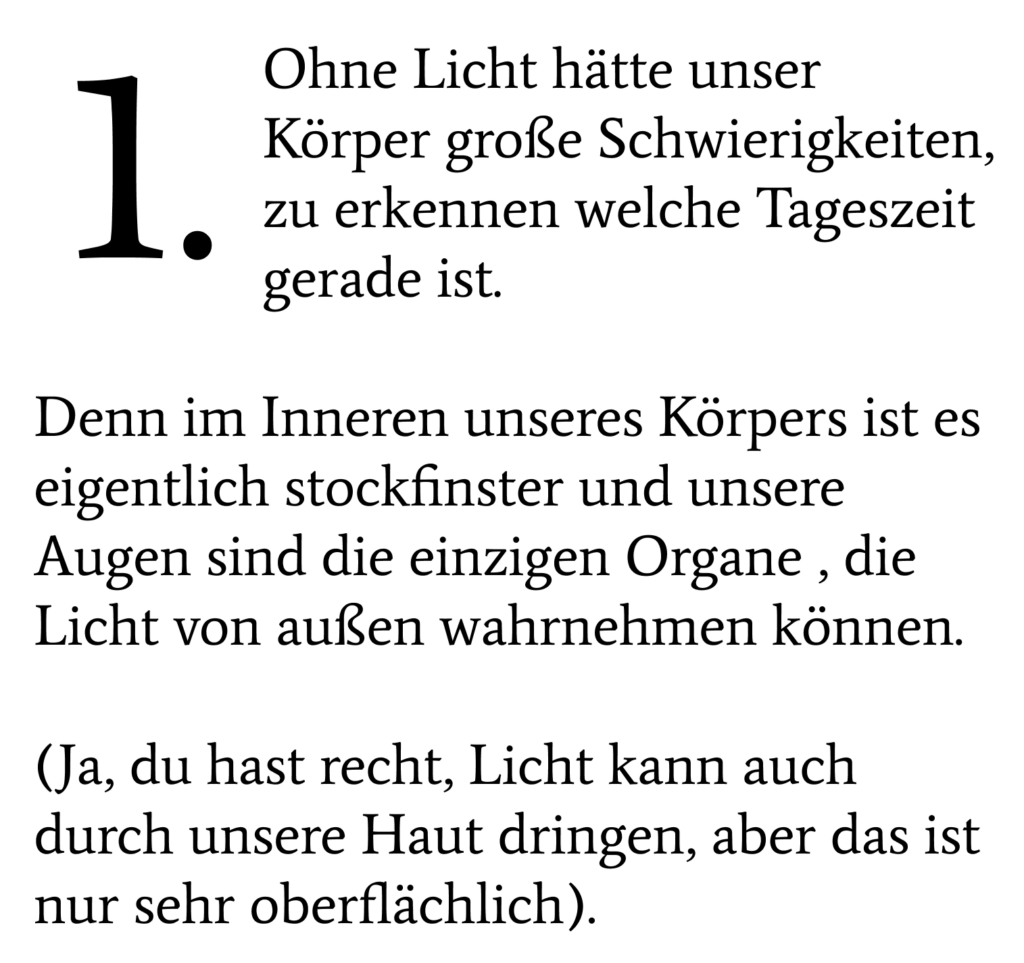
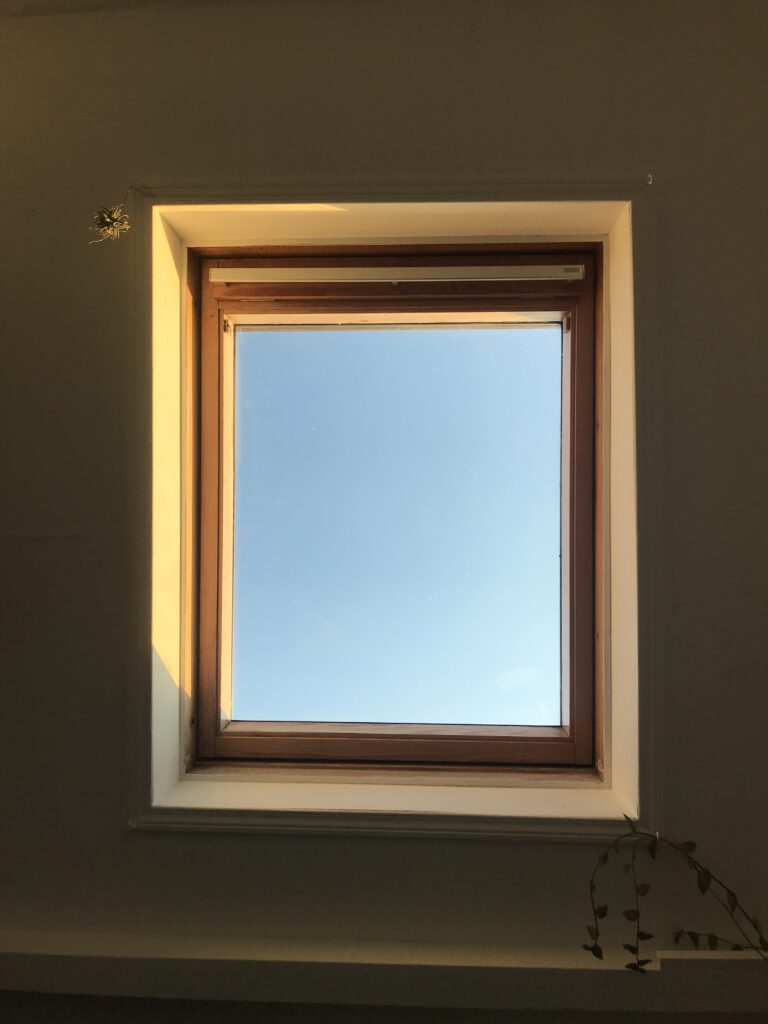
“Let’s start to understand light and how we can use it to our advantages!“
Therefor, LET’s understand this INNER rhythm:
The rhythm inside you is controlled by a clock, and the clock is located in your Brian. Scientist also say: The suprachiasmatic nucleus (SCN), located in your hypothalamus.
But we say: ‘Circadian rhythm’ and ‘circadian clock’.
Named after the Latin ‘circa’ = ‘around’, and ‘dies’ = ‘day’, so it is your 24 hour rhythm.
The presence or absence of light…
…is the main signal for this circadian clock. 2. Because of this clock your Brian knows what ‘time’ it is. 3. This process happens through your eyes. (More about this in a later Post, soon!)
For now, in short:
There are photoreceptors in your eyes which are NOT used for vision, but: They are body clock sensors which read the light in the atmosphere and tell it to your brain.
Maybe imagine it like a weather report:
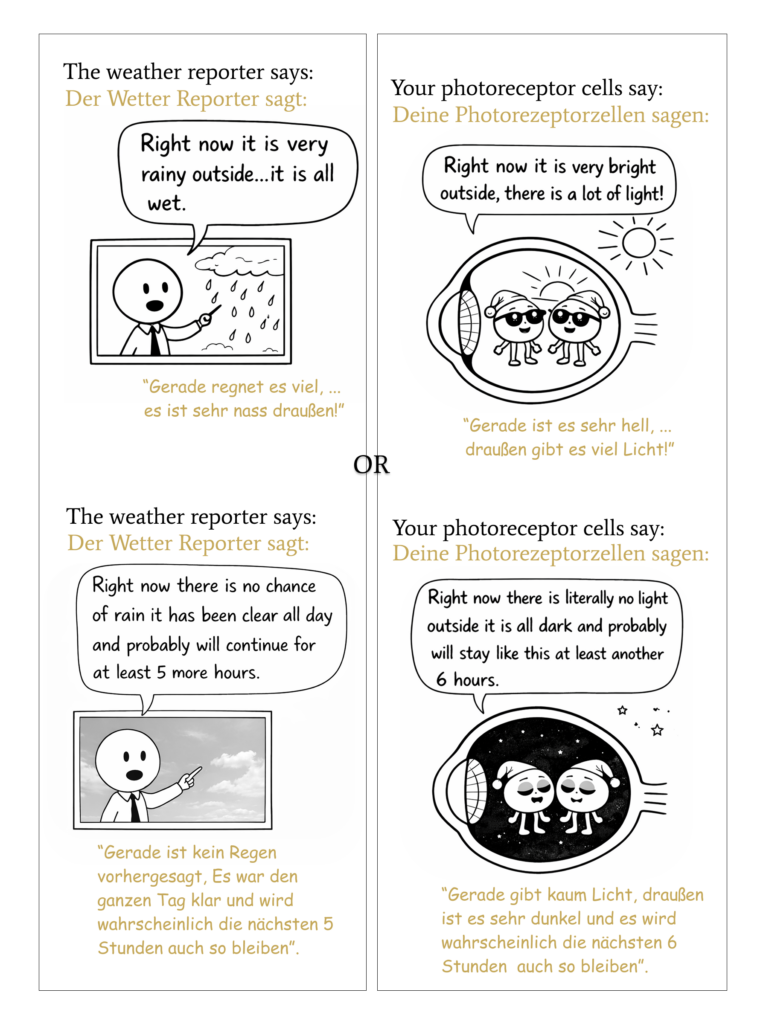
Let’s say you now try to trick your system / you don’t follow the way your body was designed. It would be like leaving the house without a Jacket even tho the weather reporter tells you its really rainy. Or, not wearing a hat in the hottest sunshine!
Just pick any of the following:
- You don’t sleep at night.
- You expose yourself to light when it is night.
- You miss out to get light during sun hours.
If your inner rhythm does not ‘spinn’ well, parts of your system (Mh, how to say it properly?) …can really get fucked!
So the key take away here, is only to know, that:
Through your behaviours you are in the position to either mess with your inner system or to help, protect and support it.
My advise? “Just start your day in the morning and finish it in the evening”
You can read more about: How to control the circadian rhythm and which systems it affects’, in a coming post soon!
Here is a little sneak peek of:
‘Systems which are coordinated and synchronised by your circadian clock.’
– Affective Neuroscience
– Mesocorticolimbic Dopaminergic System
– Endocrine System
– Cardiovascular Physiology
– Metabolism
– Immune System
– Cellular Homeostasis
– Musculoskeletal Physiology
– Gastrointestinal Physiology
– Sensory Neurophysiology
– Thermoregulatory Physiology
– Renal Homeostasis
– Reproductive Endocrinology
– Peripheral Circadian Oscillators
Don’t worry I will do my best to explain all those in the most simplest and shortest way…
xo, W.
A Quick Bonus knowledge:
RHYTMNS
The Circadian rhythm is not the only rhythm we defined but we have decided to categorize 4 different rhythms.
Ultradian rhythm: Biological cycles shorter than 24 hours, repeat multiple times a day. Regulates: Sleep (REM and non-REM), breathing, heart rate, hunger, and alertness.
Circadian rhythm: Operates on a ~ 24-hour cycle, events that happen once every 24 hours. Regulates: Hormone releases (like cortisol and melatonin), sleep–wake cycle, metabolism and temperatures.
Infradian rhythm: Biological cycles that last longer than 24 hours but still many times within a year. Regulates: Menstrual cycles and seasonal changes and affects in physiology and behaviour.
Annual Rhythm: Biological cycle that repeat once per year. Regulates: Seasonal migration or breeding patterns in animals, plants blooming, or mood changes in humans.
Even tho they all go by themselves they somehow interfere and work together. Remember, everything has its own rhythm and still works together.
Research References:
(01) Bloch, G., Barnes, B. M., Gerkema, M. P., & Helm, B. (2013). Animal activity around the clock with no overt circadian rhythms: Patterns, mechanisms and adaptive value. Proceedings of the Royal Society B: Biological Sciences, 280(1765), 20130019. https://doi.org/10.1098/rspb.2013.0019 PMC
(2) Czeisler, C. A., & Gooley, J. J. (2007). Sleep and circadian rhythms in humans. Cold Spring Harbor Symposia on Quantitative Biology, 72, 579–597.
(3) Moore, R. Y. (1997). Circadian rhythms: Basic neurobiology and clinical applications. Annual Review of Medicine, 48, 253–266.
(4) Hattar, S., Lucas, R. J., Mrosovsky, N., et al. (2003). Melanopsin and rod–cone photoreceptive systems… Nature, 424, 76–81.https://doi.org/10.1038/nature01761
(5) Bedrosian, T. A., & Nelson, R. J. (2017). Timing of light exposure affects mood and brain circuits. Translational Psychiatry, 7, e1017.
(6) Scheer, F. A. J. L., Hilton, M. F., Mantzoros, C. S., & Shea, S. A. (2009). Adverse metabolic and cardiovascular consequences of circadian misalignment. PNAS, 106(11), 4453–4458.
(07) Mistlberger, R. E., & Skene, D. J. (2004). Social influences on mammalian circadian rhythms. Biological Reviews, 79(3), 533–556.